
What actually sells yacht charter today? This question brought charter companies, agencies and related businesses together at three events organised by čarter.hr: on 6 October in Sveti Filip i Jakov for the Zadar region, on 8 October in Pula and on 14 October in Trogir.
Discussions about sales soon opened up a broader picture of Croatia’s yacht charter market, covering rising maintenance costs, pressure on charter rates, cash flow, relationships with boat owners and preparing guests for life on board.
This review brings together experiences and conclusions from those meetings. They are not a statistical assessment of the entire market, and participants did not all share the same view of the season. However, one question kept returning: how much money remains from a charter booking once the costs have been paid?
Why is charter fleet occupancy different from profitability?
A booked boat generates revenue, but the profitability of that booking depends on the rate charged and the costs it must cover. Participants pointed out that an additional booking may help pay immediate bills while leaving too little for maintenance, staff and the company’s long term stability.
Cash flow, meaning the money available to pay bills when they fall due, explained some decisions about discounts. When berthing fees, wages or fleet preparation costs need to be paid, a company may accept a rate it considers unsatisfactory to bring in money for its next bills.
The discussion about charter profitability therefore went beyond calls to stop cutting prices. A more difficult question was how to organise the business so that a company has greater freedom when deciding whether to accept a booking.
The number of weeks sold needs to be considered alongside revenue, costs and the financial result for each boat. Only then does occupancy become a meaningful measure of a successful season.
Zadar region: how can charter companies communicate the value of their service before a booking?
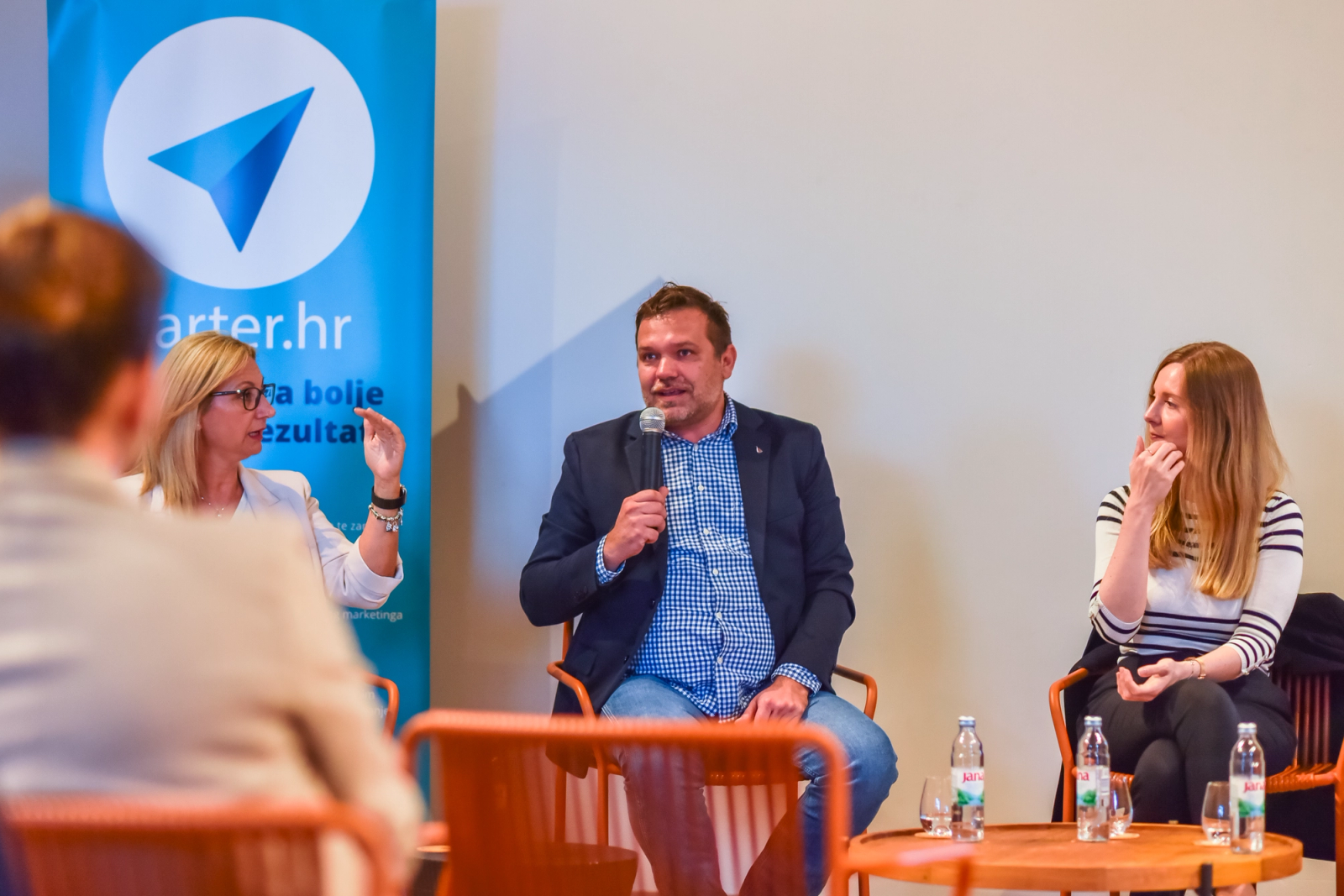
At the Čarter ćakula event held at Molum Hotel & Residences in Sveti Filip i Jakov, the discussion focused on how charter offers are presented and how charter companies work with agencies.
From an agency’s perspective, the problem is straightforward: incomplete information makes selling harder. Photographs, equipment lists and charter package details should explain what the guest will receive. When this information is missing, agents must check basic details, while guests find it harder to compare offers.
Two boats of the same model may differ in maintenance, equipment, support and included services. If those differences are not visible before booking, price can easily become the main deciding factor.
The discussion also covered the total cost of a holiday. Alongside the boat rental, guests pay for other services during their trip and form their impression of the destination based on the whole experience. A charter company does not set all those costs, but it can present its own offer more clearly and help guests know what to expect.
Comparisons with Greece also revealed different experiences. Participants discussed infrastructure, business organisation and transport connections alongside prices. A simple comparison of charter rates therefore cannot explain every strength or weakness of a destination.
The main message from the Zadar region meeting was that the value of the service must be visible at the point of purchase, supported by complete information and clearer communication between the charter company, agency and guest.
Pula: can a different charter product improve sales?
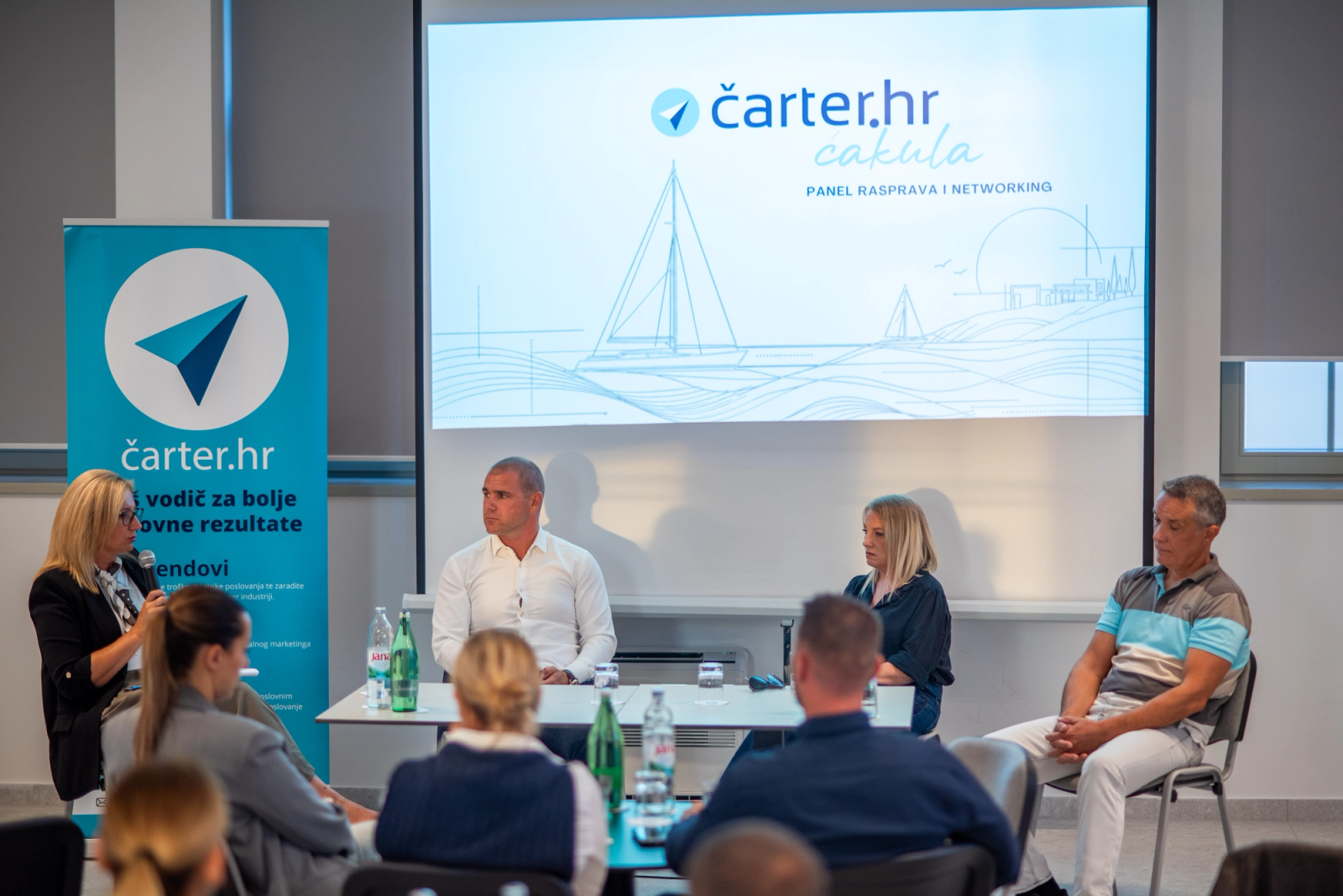
The Pula Čarter ćakula event explored how charter products can adapt to guests who can easily compare prices but arrive with different levels of knowledge and different expectations.
Participants shared business approaches such as combining sailing tuition with charter, maintaining relationships with students who later return as guests, and offering more flexible charter durations and embarkation days.
These examples showed that sales can also be developed by changing the offer itself. Sailing tuition, themed programmes or a different trip schedule can give guests another reason to choose a particular company.
The discussion also considered reaching a broader tourism audience beyond the usual nautical sales channels. This requires clearer explanations of the service: terms used every day by charter professionals may be unfamiliar to a first time guest or travel agent.
Another topic was charter management, the management and chartering of boats on behalf of their owners. Views differed on whether this model can continue to meet investment expectations or whether it will increasingly attract owners who want to use their boat themselves and cover part of its costs through charter income.
The Pula discussion encouraged participants to reconsider what they sell, to whom and through which channels. The approaches presented remain individual business experiences, and their suitability depends on each company’s circumstances.
Trogir: how can guest expectations match the service delivered on board?
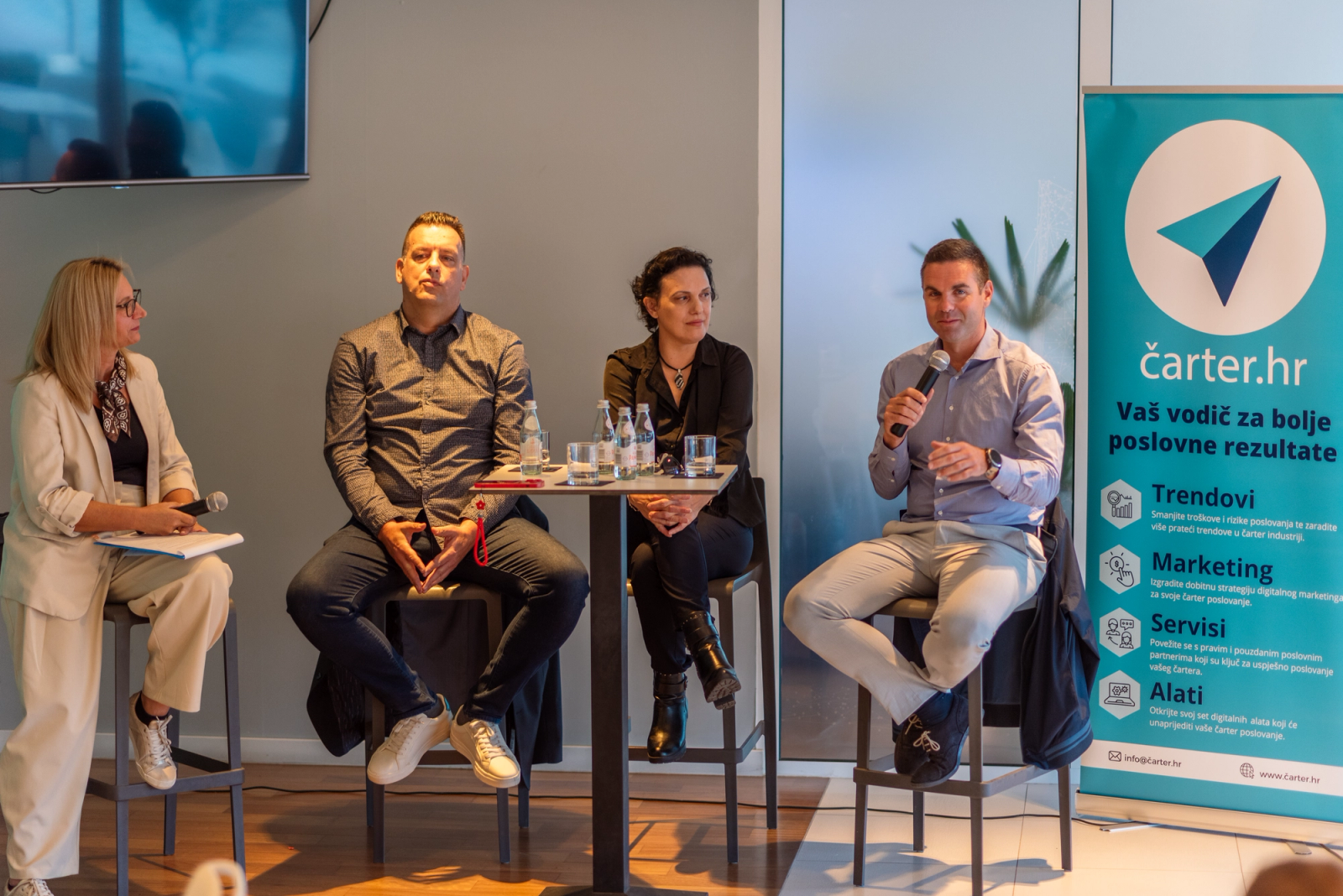
At Salt Bar in Marina Trogir, the discussion connected sales promises, service quality and relationships with boat owners.
Experiences from both crewed and bareboat charter showed that a broader service offering does not automatically prevent misunderstandings. Guests may have expectations that do not match how the boat can be used, the skipper’s role or what is possible during the trip.
Participants therefore discussed preparing guests before arrival, defining responsibilities between agencies and charter companies, and providing a thorough boat handover. Digital instructions and videos can help, while participants also stressed the value of someone who knows the particular boat and can explain its features.
Practical examples showed how much precision matters. Stating that a boat has air conditioning is not enough if guests do not know which areas it cools. Photographs should accurately represent the boat guests will receive. These details shape expectations and affect satisfaction after arrival.
The discussion about boat owners revealed differences in purchasing motives and income expectations, alongside pressure from rising costs. Participants did not reach a shared view on the viability of individual business models, but they stressed the need for more realistic financial calculations and open communication.
Promises made during the sales process must match the service the charter company can deliver. Maintenance, people, information and guest preparation all shape the experience on board.
How do last minute charter discounts affect bookings?
Large and unpredictable discounts were discussed at all three meetings. According to experiences shared during the discussions, guests who see lower rates after the early booking period may begin delaying their purchase in anticipation of further reductions.
That expectation makes advance sales harder. Some participants also described requests for further discounts on already reduced rates, while agencies highlighted competitive pressure and the possibility of guests booking the same boat through another channel.
The charter company sets the terms, the agency presents the offer, and the guest compares the available options. Unclear information and unpredictable pricing increase pressure on everyone involved.
Clearer service packages were mentioned as one possible response. Guests can assess an offer more easily when they know what is included and which additional costs to expect. However, participants cautioned that the market will not always recognise that value or reward it with a higher price. The profitability of a package must therefore be checked against the company’s own costs and revenue.
Where do charter companies see room for cooperation?

Training, information sharing, clearer business relationships, possible joint purchasing and representing the industry’s interests were among the areas discussed.
At the same time, participants pointed to differences in company size, ownership structures and commercial interests. Some saw potential in smaller companies working together, while others highlighted limited time and previous difficulties in maintaining a shared direction.
The need for cooperation did not mean agreement on every proposal. Commercial decisions remain with each company, and the discussions should not be interpreted as a collective agreement on prices.
What kept returning was the need for the industry to describe its problems more clearly and identify the issues on which companies could work together.
What do the Čarter ćakula conclusions mean for Croatia’s yacht charter industry?
The three meetings connected sales with everyday operations. They brought together the perspectives of companies that need to cover costs, agencies that need complete information, and the people on board who must deliver on sales promises.
Four questions emerged for further work:
- How can companies track actual charter profitability alongside the number of weeks booked?
- How can differences in quality and service be explained before a guest books?
- How can first time charter guests be prepared for life on board?
- How can the expectations of charter companies, agencies and boat owners be brought into line?
Čarter ćakula did not produce a single business model for the entire industry. The events provided practical examples, different explanations of shared problems and a place to compare experiences from three regions.
For čarter.hr, this also sets the direction for future work: reporting experiences from daily operations, connecting them with market analysis and following approaches whose value can be tested in practice.
More profitable charter operations in Croatia require sales, costs and service quality to be considered together. The next step is to apply the conclusions from these discussions and assess the results within each business.