- 05.03.2026.
- Management, User experience
In this article, we explain what the guest digital journey means in practice and why it has become a matter of standards rather than a “digital trend”. We guide you through three key phases of the journey (before arrival, on board, after return) and show what guests truly need in each phase, what a digital welcome pack should look like and when it should be sent, why having a single point of help on board (QR/link) reduces stress and speeds up support, and how a short post check-out follow-up turns feedback into quality and recommendations. Within the article, you can also download a template that can be adapted to a specific base and fleet.
In Croatian charter, the same sentence is often repeated: guests come for the sea, the sun, and the boat. That is true. But more and more often, they leave – or return – because of something else. Because of the feeling that everything was clear, organized, and professional.
Today, the difference is not created only on the docks. It is created in communication before arrival, in how small issues on board are handled, and in how feedback is managed after returning to the base. Right there, between guest expectations and operational reality, standards are formed.
A guest digital journey in charter is no longer “just another PDF” or “just another pre-arrival message.” It is a systematically designed experience that the guest moves through from booking to review. Standards are not raised through slogans, but through processes that are repeatable, measurable, and clear to the entire team.
This text is practical. It explains what a guest digital journey means in real operations, how to structure it across three phases, and how to turn it into a standard rather than an improvisation.
Why the Guest Digital Journey Is Now a Matter of Standards, Not a Digital Trend
Charter is a specific product. The guest receives transportation, accommodation, and an experience in one. Added to that are technical details, rules, safety procedures, responsibilities, and financial elements such as the deposit.
In such a system, inconsistent information leads to an inconsistent experience. And in the long run, inconsistency is the greatest cost.
During the season, bases operate under pressure. Teams communicate quickly, often within timeframes that leave little room for additional explanations. Standards most often “break” in communication: someone explains in detail, someone briefly; someone sends instructions on time, someone at the last minute; someone handles problems calmly, someone improvises.
Guests do not see the pressure of the season. They see only the level of professionalism.
A guest digital journey is not an attempt at full automation. It is a way to deliver key information consistently to every guest, at the moment they need it, in a format that is easy to use.

Three Phases That Create a Logical and Effective Journey
A good journey follows a clear sequence. Guests receive information when they truly need it, not too early and not too late.
1. Before Arrival: Less Panic, Faster Check-In
Most pre-arrival inquiries relate to recurring questions: base location, parking, documents, deposit, fuel, check-in rules, delays.
The issue is usually not that information does not exist. The issue is that it is not consolidated in one place and presented in a clear structure or everything is packed into a single document that is sent before arrival.
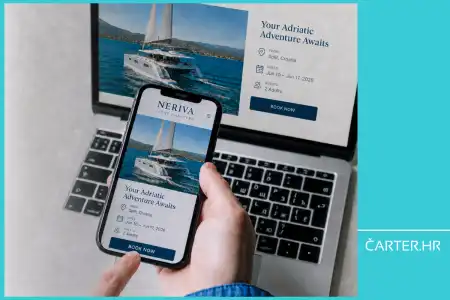
A digital welcome pack should not be a lengthy document. It should function as a micro-service: mobile-friendly, clear, focused on the next 48 hours of the guest’s experience.
When properly set up, several concrete shifts happen:
- Check-in becomes shorter
- The number of calls and messages decreases
- Misunderstandings about deposits, fuel, or procedures become less frequent
Standardization in this phase means that every guest, regardless of sales channel or staff member at the base, receives the same framework of information and the same communication tone.

2. On Board: Help Within 60 Seconds
Once the guest leaves the base, the second phase begins. Most situations on board are not major breakdowns. They are small technical challenges that become stressful because the guest does not know what to check first or whom to call.
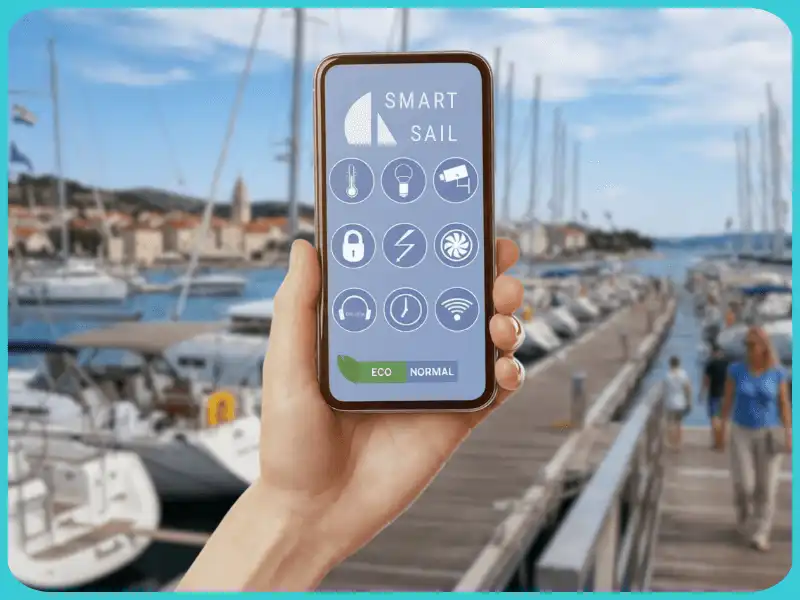
One simple solution has proven more effective than ten emails: a single QR code or a single “Boat Info” link that leads to short instructions and a clear channel for reporting issues.
In practice, this means:
- Short instructions for toilet, gas, electricity, water, fuses, anchor
- Clear steps for reporting a problem
- Instructions on what to send, such as a photo or video
Standardization in this phase is not about technology. It is about service. Guests feel that a system exists and that support is structured, not improvised.
3. After Return: Feedback That Builds Quality
The third phase is often the most neglected. Yet this is where standards are truly revealed.
The simplest model is often the most effective: one message sent 12 to 24 hours after check-out. Two questions.
The first measures willingness to recommend through a simple rating. The second asks for the reason behind that rating.
This makes it clear where the process is breaking down: handover, cleanliness, communication, technical preparation, or misaligned expectations.
Standardization means responding to negative experiences within a defined timeframe and with a professional tone. That response often determines whether a guest disappears or describes the company as fair and well organized.

Two Indicators That Show Whether the Journey Really Works
It is easy to talk about standards. Measuring them is harder. Two simple indicators quickly provide a realistic picture.
1. How Many Guests Open the Welcome Pack
If guests do not open the content, it is difficult to expect a prepared arrival. Tracking link or content openings provides insight into two things:
- Whether the content is clear and concise
- Whether it was sent at the right time
This does not require advanced analytics. Basic tracking through an email platform is sufficient.
2. How Many Guests Would Recommend You
Willingness to recommend is not a marketing phrase. It reflects the process.
If comments repeatedly mention unclear information, slow check-in, or weak communication, the issue is not with one guest. It is a signal that a specific phase of the journey requires adjustment.

How to Turn It Into a Standard, Not Just a Document
The most common mistake when introducing a guest digital journey is stopping at creating a document.
A standard is created when:
- Content addresses real, recurring questions
- Communication is sent consistently at defined times
- There is one clear help point on board
- Feedback responses have a defined deadline
When implemented, the base feels the change first: fewer interruptions, less improvisation, faster handovers. Only then does the guest feel what matters most: a sense of control and organization.

Template for Base and Fleet
To keep this practical, we have prepared a template that can be adapted to a specific base and fleet:
- Structure of a digital welcome pack with a clear content sequence
- A message for 7 days before arrival and a reminder 48 hours before
- A message 12 to 24 hours after check-out for collecting feedback
The template can be adapted to the format that fits your operations, ready for branding and implementation without long preparation.

Why This Matters Right Now
Croatia is a charter powerhouse by volume. The next qualitative leap, however, will not come from fleet expansion. It will come from raising standards that guests experience without needing additional explanation.
Clear communication before arrival. Accessible support on board. Professional follow-up after return.
The guest digital journey is no longer about digitalization. It is quality infrastructure. And standards are ultimately measured not by intention, but by repeat bookings and recommendations.

Categories of trends
- News
- Sale
- Marketing
- SEO
- Web design
- Social media
- Technology
- Regulations
- Management
- Education
- Finances
- User experience
- Graphic design
Newsletter
Sign up for the newsletter and receive the latest trends and tips straight to your inbox