
- 25.02.2026.
- News, Marketing, Graphic design
This article raises the question of what needs to be clear before starting to create a brand and visual identity. Our author Barbara Zec, through a few simple starting points, shows why some projects remain at “just a logo”, while others take a direction that can be implemented for years. She also provides insight into the part of the process that is not visible, and often determines whether the result will really work for the business.
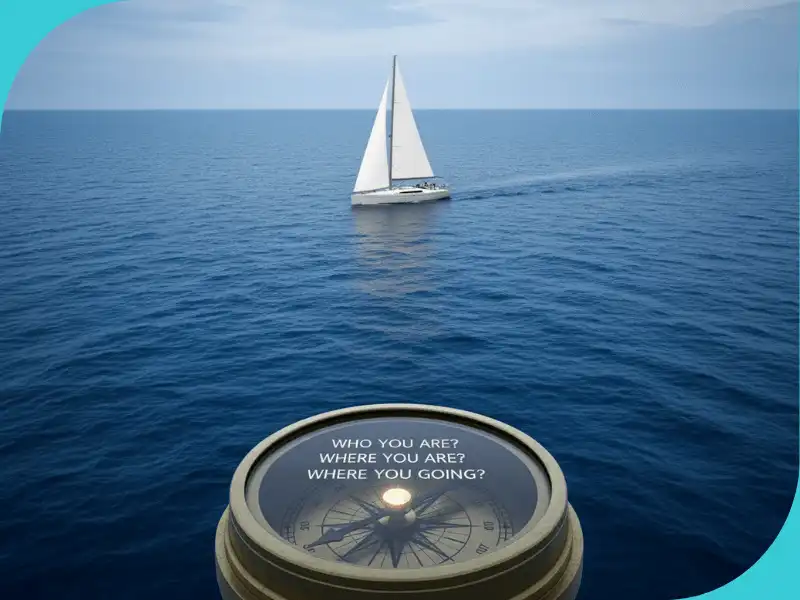
To begin the process of branding your business, you should be able to answer these three seemingly simple questions:
- who you are
- where you are
- and where you are going
Setting up your brand and visual identity without answering these three questions would be like being out at sea, without an engine, without an oar, and without an anchor - polishing the deck. Pleasant in complete calm, but with the first bad weather, you are in trouble.
Business branding is one of the key elements that distinguishes a superficially put-together visual identity “just so I have something to start with” from a thoughtfully developed identity that systematically supports the growth of your business. And that is the goal, isn’t it?
Many are surprised by how long the branding process takes when they embark on such an endeavor for the first time. At first, it is hard to see why “come on, just draw something here” costs what it costs (“too much”) and takes as long as it takes (“too long”).
You may have come across articles about a redesign that cost, for example, 100 thousand euros. Usually, only the logo gets commented on, “my grandma could do that in five minutes” and the like. However, a logo is only a small part of a visual identity, and a visual identity is only part of a complete brand. But designing a visual identity is only the beginning of the investment, because a brand does not become recognizable automatically.
Time is crucial for establishing a recognizable brand. But even that is not a magic wand. It will work in your favor only if you consistently use what has been designed for you across all communication channels. Sounds quite complex, doesn’t it? To go back to the 100 thousand logo, it is only a symbol of everything that the business and the brand are.
A logo is the “Pavlov’s Bell” of your brand. When you recognize a logo, certain emotions and opinions automatically arise in you. In order for your “visual bell” to work for you, you need to take a few steps back. You need to define what you do, how you do it, and for whom. I want to show you how you can prepare well to start working on your brand. And before you start - start.
The invisible part of the branding process
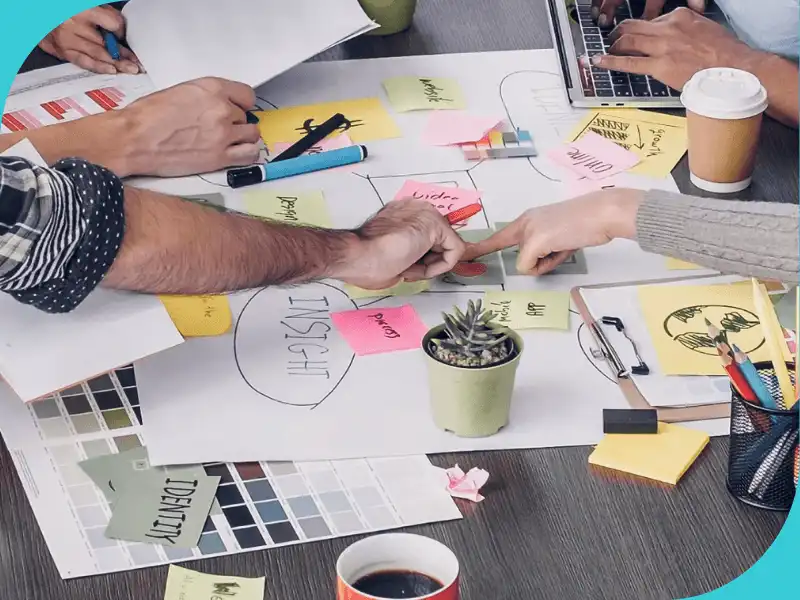
I've already written about the process I go through with clients when working on a new business image. In short, the design process can be divided into two major phases: analysis and synthesis.
The second phase, synthesis, is what most people consider design: drawing proposals, developing conceptual and execution solutions; everything you see in the presentation and can comment on. Unlike synthesis, in the analysis phase that precedes it, the designer learns and researches, trying to find out as much as possible about you, your needs and your industry. A well-executed analysis is essential for creating functional design.
This part of the job is "invisible", but it establishes the foundation on which the brand is built.
A house is safer with a stronger foundation, and a tree is more resilient with a deeper and stronger root. The same applies to a brand’s foundations. The quality of the foundations is reflected in recognition by your customers, in the ease of using brand assets, in business results that are the outcome of clear brand communication...
Even if you have had your logo and colors for years, stay with me and try to answer the following questions. The answers will tell you whether you are heading in the right direction or whether you have drifted off course over time.
Three conditions for a branding process that brings concrete results to your business
I do not support clickbait, so I revealed those three conditions right at the beginning. We'll go into the details below. So, in order to be ready to enter the branding process, you need to know who you are, where you are, and where you are going.
The answers will allow you to create a brand that is perfectly aligned with your business plans, that attracts your ideal customers, and that supports you in your growth.
1. Who are you - a look inside
Who are you? Who is your brand?
We start with a personal question because we always bring ourselves into our business. Otherwise, one yacht charter would be quite enough, right? Otherwise, one yacht charter would be entirely enough, wouldn’t it? But you also know there is room for many different options and variations, even lined up next to one another, although to an uninformed observer, all yacht charters seem to offer the same service. You know much better than I do that this is far from the truth.
Remember why you started your business, besides the obvious reason, to earn something. Remember why you started your business, apart from the obvious one, to make money. There are countless ways to make money, but why did you choose this particular way? With what goal? You probably already have your offer defined. Can you provide your designer with a list of your services or products as well? These are all important pieces of information for moving into design, although it may not seem like it at first. The more detailed and comprehensive my client is in their answers, the easier it is for me to create a picture in my head and, ultimately, on paper. For example, your list of services helps the designer tailor the solution for the intended applications and create so-called mockups to show you how the design will look in use. Because a logo that looks great in a presentation and on a white screen can turn out to be completely unusable in the application. This is where a lot more people stumble than they would think.
When you answer the question of who your brand is, it is good to highlight what the customer gets by buying from you. Why would they buy from you, and not from “next door”. How are you different from your competition? That's your USP, unique selling point. That is what sets you apart from others. The designer can use the answer to this question to visually highlight your distinctiveness. Or you can use it and emphasize it in communication with customers, which is another segment of building your brand. And standing out among the rest.

2. Where you are - knowing your environment
A business exists within various relationships. Therefore, it is important to remind yourself that design is not created to please you, the client. I also made that mistake for a long time by asking clients questions such as which color you personally like, and which colors you do not want to see in your brand. That part of the process can be skipped entirely. And replaced with better questions. For example, what your values are and what your customers’ values are.
In other words, the designer needs to get to know you and your environment. Therefore, you should know how your brand lives in relation to two main groups: customers and competitors. If you cannot convey that to the designer, he or she will work blindly, and it is questionable whether an adequate solution will be reached. You know that one, “I don’t know what I want, I’ll know when I see it”. (You won’t. Because you have not defined all of the above).
It is good to know as much as possible about your customers: who they are, where they are, what they want, how they buy, how they talk, how they live, how they navigate, how and when they decide to make a reservation... Then you will know what to do and where to appear when you start marketing and sales activities. The designer must obtain information about the customer profile in order to use the elements and principles of design to create materials for you that will attract your ideal customer.
The other important group in the environment is the competition. Here I must mention that it is not bad at all that you have it. On the contrary. The more, the better. It means there is demand. And isn’t it great that you do not have to “reinvent the wheel” and can learn from their mistakes?
Designers also analyze your competition: what they do well and what they do not, what is typical of the category, and what is characteristic of individuals. Personally, I like to place all competitors’ logos into one layout with space for the client’s logo proposals. That way, when testing ideas, I can immediately see whether it is clear what industry it is, whether it stands out, and what impression it leaves. But we still need to get there. Today, we are focusing on preparations.

3. Where are you going - a look into the future
It is important to note that a brand is not the same as branding. Branding is an active process through which the foundations of a brand are established, including the visual identity. However, the branding process does not stop there. It lasts as long as your business lasts. Every business move you make, the way you welcome clients, every new brochure, also falls under branding. A brand is the result of all those activities. A brand is what others think about you.
You must not forget where you are going. What you want others to say about you, but also what do you want for yourself and your brand. I like to ask the question, “Where do you see yourself in ten years?” It may seem like a cliché question, but the answer to it gives valuable information to the designer you entrust with shaping your identity. Always imagine the best possible future. And a little beyond that.
Although laying the foundations is serious work, it does not mean you cannot enjoy it. In fact, it is essential that, every time you see your logo or any other brand material, you feel good about it. You will look at this identity for years, and it will become a symbol that your surroundings associate with you. You don't want to have a sour taste in your mouth every time you see it because the creation process was painful and you could not come to an agreement with the designer at all, and the result is a compromise that no one is satisfied with.
In addition to this rather big question, in this section I ask questions whose answers form the foundation of the brand that most design questionnaires deal with. In this part, you need to provide answers to standard questions about your values, that is, which attributes your brand has; how it plans to behave in the market, how it communicates with customers and the environment. If you are not sure, or you are still working on it, you can look at how brands you think highly of do it. They don't have to be from the same industry. If you feel a connection with a brand, it's not just because you like the way their logo looks and the colors they use. You feel that connection because, most likely, you share the same values.

What's all this for?
Branding your business requires an investment of certain resources. Don't make the mistake of paying and waiting. Branding is an active process in which only one side, the designer, cannot participate. If you come across such an offer and such a designer, who asks no questions, then ask yourself whether you want to allocate resources to an unclear process with a result that has no foundations. I think you know the answer to that question.
In the end, if you take the time to think about these questions and enter the branding process with clear answers, you will not only help your designer create the best possible solution for you. You will also help your business sail in the right direction and help your customers find you, and later come to love you. All because you took the time to prepare. You know what they say, “good preparation is worth its weight in gold”.

Barbara Zec
Barbara Zec is a visual communications designer with over 20 years of professional experience. She focuses on creating design solutions that are recognizable, functional and resist passing trends. She enjoys the challenges of putting new brands "on their feet" and provides her clients with design support through all phases of brand building and, later, brand maintenance. In addition to working actively with clients, she is involved in education in graphic design and visual communications, and writing about design and related topics.
Categories of trends
- News
- Sale
- Marketing
- SEO
- Web design
- Social media
- Technology
- Regulations
- Management
- Education
- Finances
- User experience
- Graphic design
Newsletter
Sign up for the newsletter and receive the latest trends and tips straight to your inbox