
- 15.12.2025.
- News, Management
Sometimes the issue isn't what happened, but how it was said. One wrong sentence, and you might lose a guest or an employee. How much does one poorly chosen sentence really cost us? And what happens when we replace it with a better one?
Your communication, whatever it may be, goes “out” - into Google reviews, social media, conversations between guests and crew, and even agents. And poor communication doesn't just affect interpersonal relationships - it impacts sales, reputation, and the long-term stability of the company.
This is a story about real, everyday situations that make some guests never return - and some employees leave the company mid-season.
Where things break - and what to do about it (when a skipper doesn’t know how to say "no")
A skipper’s role isn't just to steer the vessel, but to steer expectations. Although the crew is often expected to be friendly and “easy-going,” that doesn’t mean everything should be accepted without hesitation.
Some skippers avoid saying "no" directly because they don’t want to come off as “difficult,” because they feel pressure from guests who “paid for the trip,” or simply because they don’t know how to refuse something without sounding rude.
Examples:
- A guest wants to do a 120 NM route in 3 days, and the skipper politely says “we can try,” even though he knows it will be exhausting, with no time for rest, swimming, or safety checks.
- Guests want to anchor in a small, unlit bay just before nightfall, and the skipper feels obliged to agree, even though he knows it’s risky.
- A group wants to visit more destinations than is realistically doable in one day, and the skipper juggles things until he can’t anymore - and ends up looking like the one who planned it poorly.
Why this doesn’t work:
- When “no” is avoided from the start, the situation usually ends up twice as bad: the guests are unhappy because they didn’t get what they imagined, and the skipper ends up exhausted and stressed.
- This undermines the skipper’s professional role - he no longer appears as the authority managing the week at sea, but as someone simply executing others’ wishes.
- And this doesn’t just hurt the guest’s experience. It damages the company’s reputation. Because in the end, guests don’t say: “The skipper was disorganized,” but “We had a bad trip with company XY.”
How to communicate it:
- The skipper doesn’t have to say “it’s not possible,” but can say: “I can immediately tell you what’s realistically doable and what would be risky or too demanding.”
- Or: “I understand that it sounds appealing, but to do it properly and without risk, we’ll need more time or a different plan. Here’s what I’d suggest as a safer but equally interesting option.”
That tone doesn’t come off as rejection to the guest - instead, it offers an experience that’s better for them because the skipper knows what he’s doing.
What can you do to ensure the skipper doesn’t face this alone?
- Base support: Provide skippers with tools and example phrases they can use in situations where “more than normal” is being asked.
- Consistent messaging: If the agent writes in the initial emails “everything is possible,” the skipper is already at a disadvantage. Consistent communication from sales to check-in is needed.
- Practical training: These don’t have to be seminars - internal sessions that cover real-life scenarios and offer ways to respond to guests without conflict are enough.
Setting realistic expectations is not a weakness - it’s professionalism. Guests might not realize it right away, but by the end of the week, they will. And once they realize they were guided - not just transported - that becomes a reason to come back.
When a base manager criticizes a skipper in front of guests
Yacht charter is a team sport. If you discuss “who is to blame” for mistakes in front of guests, you are at a loss for several reasons. Such communication may resolve a situation in the short term or show who is right, but in the long run, it sends a message of discord, insecurity, and poor organization.
In the eyes of the guest, the base manager and the skipper are not two separate roles - they are representatives of the same brand. When they argue publicly, guests will not think “this is constructive” but rather “no one here knows what they’re doing.”
Examples:
- The guest hasn’t even boarded the vessel yet, and the base manager already comments: “Did you even check this?”
- The skipper is explaining safety procedures to the guests, and from the background comes: “That’s outdated, we have a new procedure.”
- There is a discussion in front of the guests about whether the skipper picked up the gas or not, instead of resolving it internally beforehand.
Sometimes such comments come from frustration, fatigue, or the desire to “clear things up immediately.” But in front of guests is never the time or place for that, because the damage becomes greater than the benefit.
Why this doesn’t work:
- Because these situations create discomfort instead of responsibility.
- Instead of trust, they create doubt, because guests no longer know who to believe.
- Instead of a solution, they open up more questions.
Additionally, employees who are called out in front of guests lose authority. The next time they try to explain something to guests, they are no longer taken seriously because someone already “showed who’s boss.”
How to resolve it:
There is no need for tension. If something needs to be corrected, it can be resolved in two sentences - without damaging the relationship.
- “They didn’t receive the gas information, can you quickly explain it to them now and we’ll replace the bottle right away?” This is a call for cooperation, not a public calling out.
- “When you finish the briefing, I have a small thing we need to align for the next guests.” This way, both retain authority and unpleasantness is avoided.
- “I see you skipped a part in the rush, but it’s not a problem. When you get back from the trip, I’ll explain everything.” Clear, but non-confrontational.
What can the base do to make this the standard and not the exception?
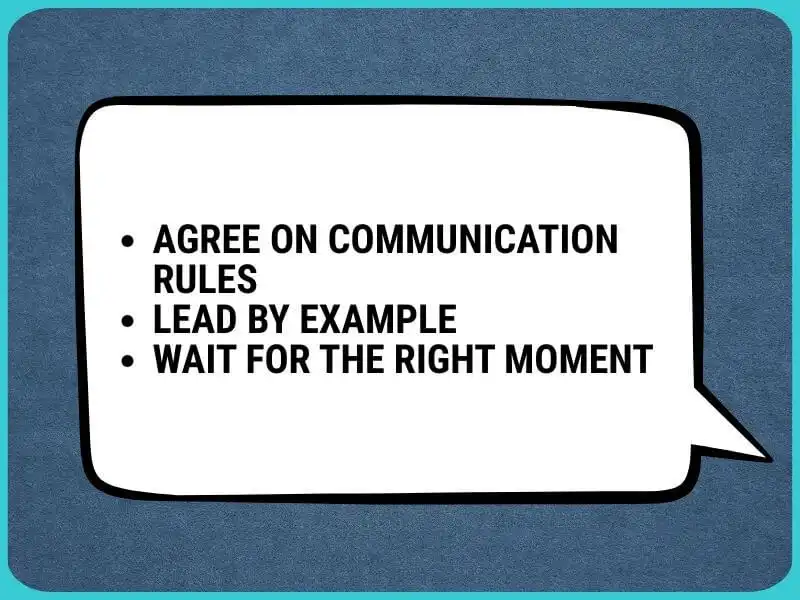
- Agree on communication rules in front of guests: At the beginning of the season (or more often), agree that everything that can be said and resolved earlier, should be.
- Lead by example: If the manager shows self-control and respect toward skippers, others will follow.
- Wait for the right moment: Some things are not urgent. Wait and resolve them when the time is right.
Respect is not a weakness - it is the currency that builds the entire crew and the company.
Because a guest who sees colleagues supporting each other and communicating - especially when something goes wrong - leaves with the feeling they sailed with people who know what they’re doing. And that is remembered.

When you tell an employee what not to do, but not what to do
Managing people does not mean only correcting mistakes but also providing clear work guidelines. And that is exactly what is often missing in everyday communication.
In moments of rush, frustration, or fatigue, many managers and more experienced team members instinctively react with prohibition:
- "Don't talk to the guests about that!"
- "Don't tell them you don't know!"
- "Don't write to people like that!"
And it ends there.
Why this doesn't work:
An employee who only receives information about what not to do does not know what to do next. They don’t know what is actually expected of them. If it is an employee with little experience or a seasonal worker, this very quickly leads to insecurity, withdrawal or, even worse, passive obedience without thinking.
In situations where communication with guests is key, this becomes a serious problem.
Examples:
- A guest asks for the exact time of departure, and the employee is afraid to say they don’t know, so they say: "I have no idea, they never say anything."
- An employee replies to an email with a harsh tone and asks for more information, but the email remains unanswered due to fear or lack of knowledge, and they get the remark: "Don’t do it like that."
- A young employee, in a panic, tells the guest they have to wait "because it's chaos in the base," thinking that honesty always helps. They get criticized without an explanation of what would have been better.
How to do it better:
Instead of just saying what not to do, offer an alternative. Even one guiding sentence is enough:
- "If you don’t know the exact time, say that we expect it to be completed within two hours and that we will contact them as soon as we are sure."
- "When the guest becomes nervous, tell them you understand their concern and offer them information on when they can expect the next update."
- "If you feel uncomfortable saying something is delayed, use the sentence: 'We are working on getting the boat ready as soon as possible. We will contact you as soon as we have confirmation.'"
Provide sentences that can actually be used. People often don’t know how to say something. If you equip them with specific examples, they will have more confidence and handle situations better.
Include them in the solution. Ask: "How could you say that to the guest so it doesn’t sound harsh?" but don’t frame it as a test, rather as an invitation to think.
Follow up on what they remembered. Instead of "Did you get it now?" try "Give me your version of how you would say it."
People learn best when they know what to do next time - not just what was wrong last time.
When a guest receives three different pieces of information from three people
One of the most frustrating situations for a guest is not a breakdown, delay, or bad weather, but when three different people from the same yacht charter give three different pieces of information.
Miscommunication creates the impression that no one knows what they are doing. And what’s worse, it doesn’t even have to be anyone’s ill intent. But the guest doesn’t see nuances. They see chaos.
Examples:
- The guest arrives early because the agent told them the sailboat might be ready by 1 PM. At the reception, they are told it won’t be possible before 5 PM. The skipper later says, “Maybe in an hour.”
- The guest asks if the air conditioning is working. One person says it is, another says “something strange was heard yesterday,” and a third says the technician is coming tomorrow.
- The agent promised an outboard engine free of charge, but it’s not listed in the contract at the base. The guests feel deceived, even though it was probably a misunderstanding.
Why this doesn’t work:
- As soon as the guest feels confused, doubt starts to grow.
- As soon as they feel doubt, they begin to question even what was fine until then.
- And once trust is lost, even the smallest detail becomes a reason for complaint.
Guests want to feel like they are in good hands. If the staff do not communicate with each other and misunderstandings occur, the impression left is one of amateurism, even if everything else was done correctly.
How to respond better:
First rule: acknowledge the mistake. That doesn’t mean taking the blame, but taking responsibility for clarifying.
- “I see you received different information, I’m sorry about that. We’ll clarify the situation right away and see how we can resolve it in the best possible way.”
- “You’re right, there was a transfer of incomplete information. Here’s the exact situation and now we’ll see what we can do to make things easier for you.”
- “Can we start with what you received in your booking confirmation, and then we’ll check everything based on that?”
How to prevent it:
- Align the sentences everyone uses. It doesn’t all have to be scripted, but everyone should know how to communicate key points (for example, when the boat can be ready, what is included in the price, what happens if equipment is not working...).
- Regular information exchange between sales, base, and skipper is necessary. It doesn’t have to be a meeting - a morning briefing is enough.
- Establish the habit of repeating the most important information to the guest during check-in, even if they “already know everything.” It’s a better option than later having to explain why someone gave them incorrect information.
Trust is built through consistency. And that’s why, in yacht charter, it doesn’t matter who was “right” - what matters is that the guest feels that everyone on the team is working together, not against each other.
When a manager fails to recognize effort
In almost every company, there is something that is crucial for the quality of the team: the effort people invest, and the feeling that someone acknowledges it.
Employees do not ask for constant praise, rewards, or applause. But they need to know they are not invisible. When someone goes the extra mile or calmly resolves a conflict with guests, and on the other side doesn’t even hear a “thank you,” motivation and effort will quickly fade.
And then we are surprised when the best seasonal workers don’t want to extend their contracts. Or when the skipper who “always saves the day” decides to leave. Leaving usually doesn’t start because of the salary, but because of the feeling of being just a number.
Examples:
- A skipper steps in to help a colleague with a technical problem at 10 PM, and in the morning no one mentions it, as if it’s expected.
- A hostess finishes cleaning, and all she hears is: “Hurry up, we’re late for check-in.”
- A new team member independently handles a situation with dissatisfied guests for the first time, and the feedback is: “That could have been better.”
Why this doesn’t work:
- Without feedback, effort becomes invisible. And when people feel the more they do, the less they are valued, they start doing only what they must.
- Such an atmosphere creates a team that works on autopilot, without initiative. People no longer give their best, no longer offer solutions, no longer offer help.
How to communicate this better:
Nothing exaggerated is needed. Just honesty at the right moment:
- “I heard you covered the shift alone because your colleague was sick - well done.”
- “Those guests really praised your patience. Thank you for knowing how to handle people.”
- “I know you’ve put in extra effort the past few days, we appreciate it.”
A few seconds of your time, but every sentence has a lasting impact. People remember them. And they keep trying, because they know why they’re doing it.
What can help make recognizing effort a habit?
- Introduce an internal “praise of the week”. Even if it stays within the base. It’s enough to say it out loud.
- When a guest praises the skipper, pass it on immediately. And do it in front of colleagues. That builds not just ego, but mutual respect.
- Managers should observe employees not only through numbers, but through behavior. Who always helps, who handles stress best, who keeps the team together? Acknowledge that.
People stay where they feel seen, not only when they make a mistake, but also when they give their best.
If your team works well during peak season, that’s not a coincidence. Someone stepped up when it was needed. Someone stayed longer. Someone took the lead when it mattered. And that deserves to be said.
When speaking from a position of superiority
Experience is a huge advantage, but only if we know how to share it. In yacht charter bases, we often have a mix of generations: people who have been doing this for 20+ years and new team members just entering the job. This can be the perfect combination, or it can fall apart with the first thoughtless sentence.
Phrases like “Do you know how long I’ve been doing this?” or “Back in my day, we did things differently” may be said with the intention of making a point, but in practice, they sound like belittling and condescension. And they often don’t come in the calmest tone, but when nerves are already running thin.
Examples:
- A young skipper asks about a procedure, and a senior colleague snaps, “Didn’t they teach you that before you got your license?”
- A new cleaner suggests a different order for cleaning cabins, and a colleague replies, “Listen, girl, I’ve been doing this since you were in kindergarten.”
- An employee makes a mistake while filling out documentation, and the manager says, “In my day, this would have been grounds for dismissal.”
Why this doesn’t work:
Instead of experience being a source of support, it becomes a tool for domination. This does not pass on knowledge - it builds walls. And not just between two people, but between the company culture and all those trying to find their place in it.
If people feel that their lack of knowledge is being used against them, they stop asking questions. And that’s the first step toward even more mistakes and even less communication.
How to share knowledge better:
Experience can absolutely be shown, but tone makes all the difference.
- “I know this looks chaotic. I’ve been through it a hundred times. Want me to show you how I used to handle it?” That’s collaboration. That’s mentorship. That’s authority that lifts, not crushes.
- “This only made sense to me after my second season, I’m glad you asked.” This builds confidence and trust.
- “You know, what helped me when I started was doing it like this...” Knowledge that comes in the form of help, not criticism, is absorbed fastest.
How to cultivate healthy communication between generations and experience levels?
- Experienced team members should get recognition for their work, but also training on how to pass on knowledge. They also need to know how to communicate it.
- Create an environment where inexperienced employees feel free to ask questions. If they’re afraid to ask, your communication is definitely off.
- As a manager, step in when superiority becomes obvious - not because you’re protecting someone, but because you’re building a team.
Knowledge is only valuable if someone wants to listen. And people listen to those who respect them.
The best teams aren’t the ones where everyone knows everything - but the ones where everyone feels comfortable saying, “I don’t know. Show me.”
If you want to keep people in the base for more than one season, start with how you talk to them. Because even if you don’t have the budget for a raise, you always have room for better communication.

You don’t have to be a communication expert - just a bit more aware
No one here expects everyone to become a communication coach or psychologist. No one has time for seminars.
But we do have time to choose. We have time to choose how we speak and to take a second before we say something. Time for a tone of voice that builds a team.
And all those small moments are often what makes the biggest difference:
- Will the guest return.
- Will the employee stay one more season.
- Will people speak of your company as a place where people know how to work with people - or not.
Try it today - nothing too much, just this:
- Instead of criticism - offer a suggestion.
- Instead of a scolding - admit your own mistake.
- Instead of a command - ask, “How would you solve it?”
Because that’s how every good team works if it wants to last longer than one season.
If you found this text useful, let us know which topics trouble you in your daily work.

Categories of trends
- News
- Sale
- Marketing
- SEO
- Web design
- Social media
- Technology
- Regulations
- Management
- Education
- Finances
- User experience
- Graphic design
Newsletter
Sign up for the newsletter and receive the latest trends and tips straight to your inbox