- 10.11.2025.
- News, Marketing, Management
If the thought “Maybe this is too much for Excel” has ever crossed your mind, this text will help you assess that with certainty. Many yacht charter companies rely on spreadsheets because they are simple, familiar and “get the job done”. But as the business grows, the amount of information and tasks that need to be kept under control grows as well, because things quickly slip out of control.
Most small yacht charter companies in Croatia start with Excel. Spreadsheets are used for everything: boat schedules, guest contacts, offers, payments, equipment lists. And at the beginning, that makes sense. It opens quickly, everyone knows where things are, it does not require the internet and everything is under control. If the business involves one or two boats, the number of inquiries is smaller and the same person handles everything, Excel can be enough.
The situation begins to change once the amount of data becomes too large. More boats, more inquiries, more seasonal workers and more room for mistakes.
When Excel no longer helps
There is no exact date when you will decide that Excel is no longer enough. It does not happen overnight.
Usually it is a frustration that starts building up. Everything still somehow gets done, but with too much stress, last minute calls, searching for data across spreadsheets and situations that could have been avoided.
Does it seem like a few things keep repeating:
- Two employees reply to the same inquiry, each with their own offer.
- A guest sends a payment confirmation, but no one knows which boat it refers to because the Excel file does not have a clearly marked offer number.
- A seasonal worker makes a change in the spreadsheet, but no one else notices because there is no record of changes.
- Someone accidentally deletes a formula, so all amounts in the table display incorrectly, and the error is noticed only a week later.
- You want to check something yourself, but you do not know where to look because everyone worked “their own way” and the spreadsheet is not standardised.
When the number of bookings increases, not even the best spreadsheet can cover it. Even with good intentions, mistakes happen because there is no clear system that tracks who did what.
This does not mean the employees are careless. They usually do the best they can with what they have.
Excel as a tool is not designed for handling communication, tracking offer statuses, keeping payment records, sending reminders and dividing tasks.
For that kind of work Excel does not help, but becomes an obstacle to better organisation, and what you need is a CRM system.
What does a CRM system do
CRM stands for Customer Relationship Management. Although at first it may sound like something used by large companies or call centers, the reality is different. In yacht charter operations, a CRM system is a very practical tool that helps manage guest communication, track all bookings, send offers, record payments, and clearly indicate who did what. In short, everything that would otherwise be scattered across spreadsheets, notebooks, emails and messages is stored in one place.
It is a central hub where every inquiry, every booking and every agreement is managed, regardless of whether it arrives by email, agency or through social media. The system provides a clear overview and helps ensure that no inquiry gets lost and no information remains written only in someone else's notebook.
In yacht charter operations, a CRM system can do the following:
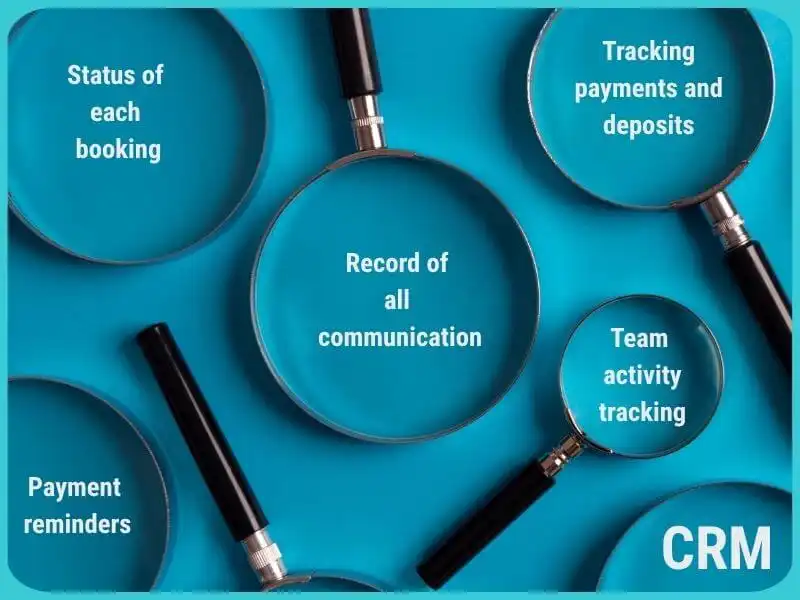
- Record of all communication: every message, email or call is logged with the booking so that everyone on the team knows what has already been agreed.
- Status of each booking: it is clearly marked whether the offer has been sent, confirmed or canceled. No more guessing or digging through old emails.
- Payment reminders: the system automatically alerts when the deposit deadline is approaching or when it is time to pay the balance.
- Tracking payments and deposits: no more manual entries into spreadsheets and checking bank statements. The CRM links the payment to the exact booking.
- Team activity tracking: it shows who responded to the inquiry, when it happened and what was agreed. This protects both employees and the company from misunderstandings.
For yacht charter companies, this means less confusion and less dependency on one person who “knows everything by heart”. If an employee goes on vacation or someone gets sick, the CRM keeps all the information in one place.
A colleague who jumps in can immediately see the conversation history and continue communication with the guest without repetition or searching.
With such a system, the business does not revolve around one person or one spreadsheet, but around the whole team working in sync and having the same insight into the current situation. This improves professionalism toward guests and reduces stress within the office.

Why many still choose Excel
For many, Excel is the first and most natural option because it is simple, already installed on the computer, does not require additional instructions and gives the feeling that everything is under control. It opens in a second, works without the internet, and most importantly it does not require a change in habits.
There are no logins, no user accounts, no monthly fees or learning a new interface. For those who have been in the business for years, Excel is something familiar and predictable.
As long as the company has one boat, around ten bookings and one person who handles everything from the first inquiry to the final payment, Excel can indeed be good enough. A single spreadsheet can contain the schedule, payment status, guest list, contact information, and even notes on technical inspections.
The problem arises when all the information stays in the head of that one person. Often, it is the owner or a long-time employee who knows where everything is, remembers every guest and runs things “by hand”. But as soon as that person goes on vacation or gets more work than they can handle, the whole system becomes vulnerable. No one else knows where to look, who agreed what, which Excel file is “the latest one” or whether the payment that arrived this morning has already been assigned to a booking.
In practice, this often looks like this:
- Guests call to confirm the offer, but no one knows which version of the offer was actually sent.
- A new colleague cannot find the guest’s contact because it is written only in a cell comment.
- A change of date was not recorded, so two guests overlapped on the same boat.
- The Excel file was accidentally overwritten, and no backup exists because it was forgotten.
Excel is not bad in itself. But it is not a system that can track everything that makes up an average yacht charter business today, especially when the business starts to grow, bookings increase and more people are involved in communication with guests. Instead of preventing mistakes, Excel under such conditions often hides them until they become a serious problem.
How to assess whether you are ready for a CRM
The number of boats is not the only criterion, and often not even the most important one. There are small fleets that handle more work than larger setups simply because they are better positioned, start the season earlier or operate across multiple markets at the same time. That is why it is better to look at the actual complexity of the business, not just the size of the fleet.
A few questions can help provide a clearer picture:
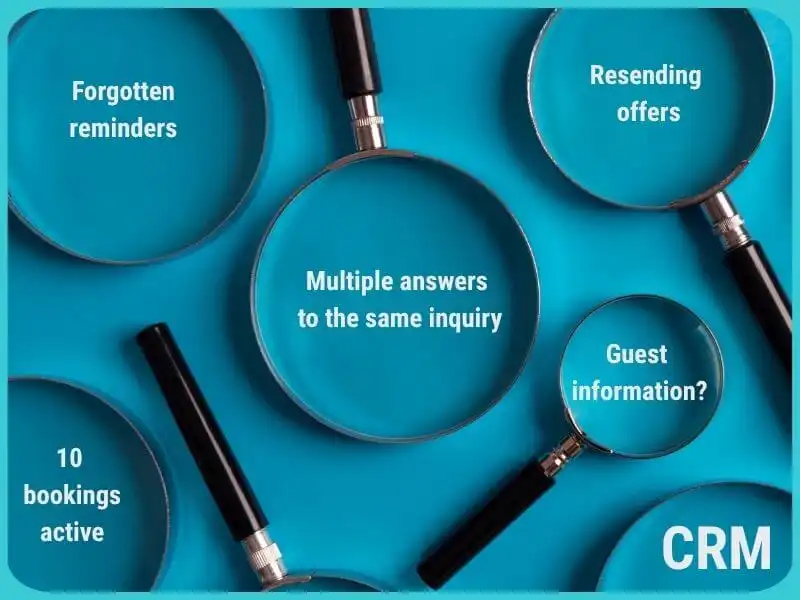
- Do you have more than 10 bookings active at the same time? If you are managing multiple boats, payments and open arrangements at once, it is hard to keep everything in your head or track it through one spreadsheet.
- Do guests often ask you to resend an offer? If offers are created manually and there is no overview of what has already been sent to whom, duplication happens frequently. It takes time and creates an impression of disorganization.
- Does it happen that more than one person responds to the same inquiry? If there are multiple people on the team and no clear system, overlap often occurs. The guest receives two versions, or no one responds because everyone assumes someone else has taken over the communication.
- Does it take you a long time to find guest information? If contact details, booking statuses and notes are spread across different places, every search becomes a mini project.
- Do you forget to remind guests about payments? In the middle of the season, when the phone rings every five minutes, reminders easily fall by the wayside. Without an automated system, payments are delayed and dates remain unconfirmed for too long.
If at least three of these questions seem familiar, it is not a coincidence. It is a sign that the business is outgrowing a structure based on spreadsheets and personal memory.
CRM systems are not made just for large companies. In practice, it is small yacht charter businesses that benefit most quickly because they have smaller teams, faster communication and a greater need for information to be shared clearly and instantly. If there is a sense that the business “slips out of control” whenever something unexpected happens, it is probably time to implement a system that keeps everything in one place, regardless of whether you have three boats or thirty.
Can Excel prepare for “retirement”
If you are not yet ready for a bigger shift in organization, that is completely fine. Some companies operate the same way for years and feel in control precisely because they do not leave anything to external systems. But even without introducing new software, it is possible to start bringing order that will help now and later, when the decision for change is made.
Instead of everything being kept in one general spreadsheet, it is worth considering a few simple habits that make daily work easier and future transition to a CRM smoother:
- Adding a column for booking status (sent, awaiting payment, confirmed, canceled) immediately gives an overview of how many bookings are at which stage.
- Entering the date of last communication helps identify which offer has “gone quiet” and who should be followed up with.
- Columns for payment and deposit, with exact amounts and dates, reduce the chance of confusion when reviewing cash flow.
- The name of the person managing the booking adds accountability and prevents multiple people from unknowingly doing the same job.
- Archiving old offers in separate sheets or files makes it easier to navigate and revisit previous seasons when it is time to analyze performance.
Even this kind of workflow raises the level of organization. There are no additional costs, but a structure slowly takes shape where everything no longer depends on one person and one spreadsheet.
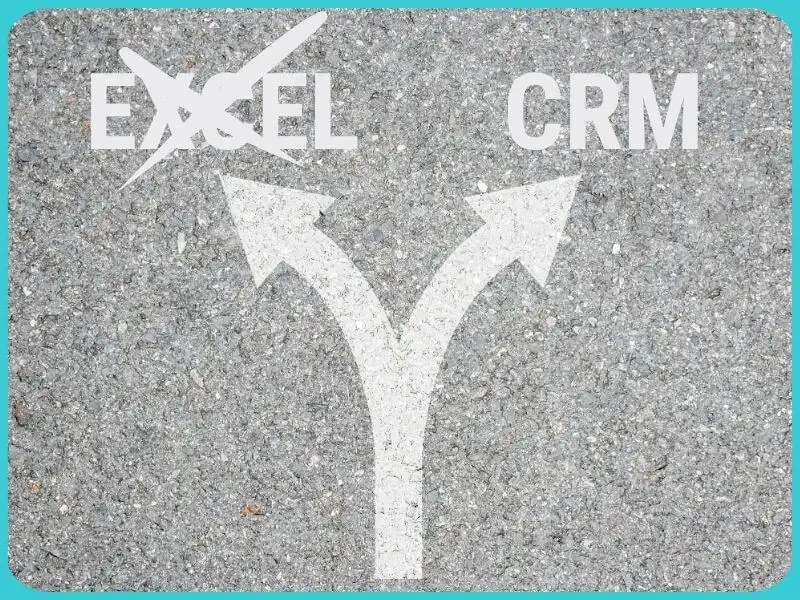
Still, it is worth being honest – Excel is a file. CRM is a system.
Excel can be fast and convenient when everything is under one person's control. But as the number of bookings, guests and team members grows, so does the need for clear information, accurate data and quick insight into the situation. These are expectations that come from outside (guests and partners), but also from within, when the business becomes too complex for “working by feel”.
CRM does not run the business for you. It does not decide who will work or what the offer will look like. But it keeps all the information in one place, shows who did what, and makes tracking easier without additional calls, notes or stress.
The decision does not have to be sudden. And it does not have to mean a complete shift. It is enough to ask: how much more can you grow before more mistakes start happening? How much information passes through your company each day that is not written down anywhere? How many times is something forgotten simply because there is no one to keep track?
If there is a desire for better organization, the first step does not have to be a large investment. A conversation is enough, without obligation, about what the system could look like, how much it would cost and what it would cover. Most small companies that go down that path end up saying the same thing: we wish we had done this earlier.
It is not about the software, but about a better way of working
Most small yacht charter companies are not looking for a “technological miracle”.
They are looking for a way to work with fewer mistakes, less wasted time and less stress when the season starts.
CRM is not a solution to all problems, but it is a solid foundation for a more stable daily routine. It helps make the work more transparent, the communication clearer and the team more efficient, whether you have three boats or fifteen or fifty.
There is no perfect moment for change. But good preparation exists. And sometimes it is enough just to talk to someone who knows what you need and who will not suggest solutions that do not serve you.
If you run a yacht charter and see yourself in this text, get in touch. Čarter.hr helps small and medium yacht charter companies find realistic, practical and long-term sustainable solutions, from digitalization to better sales planning.
Send us an inquiry and let’s connect to talk about how your next season can already be easier.


Categories of trends
- News
- Sale
- Marketing
- SEO
- Web design
- Social media
- Technology
- Regulations
- Management
- Education
- Finances
- User experience
- Graphic design
Newsletter
Sign up for the newsletter and receive the latest trends and tips straight to your inbox