- 06.05.2026.
- Marketing
OTA platforms or direct bookings? That is the wrong question. The real question is whether you know how to make booking platforms work for your business instead of against it. The yacht charter industry still operates under many unwritten rules from the old agency model, from direct guests paying more than agency guests to operators refusing repeat direct bookings “so they do not upset the agent.” While the hotel industry has long rewarded direct guests with exclusive pricing and loyalty programmes, yacht charter is still protecting a system that made sense before the rise of OTA platforms. It is time to rethink that approach.
The debate over whether Online Travel Agency (OTA) platforms or direct bookings are the better option for the yacht charter industry often comes down to the wrong question: “Which one should we choose?”
In 2026, the answer is no longer either-or.
Successful charter companies are not choosing between these two channels. Instead, they are building strategies where OTA platforms serve as visibility and acquisition tools, while their own website becomes the primary channel for conversion, repeat bookings and long-term guest retention.
The consolidation of major booking platforms and their acquisitions into increasingly powerful groups clearly shows that the battle for control over the charter market is intensifying. In such an environment, relying exclusively on intermediaries represents a serious risk to business autonomy. On the other hand, completely ignoring OTA platforms means losing access to a global audience.
The real challenge lies in finding the right balance.
The yacht charter industry paradox: Why does the direct guest pay more?
Before discussing conversion strategies, it is important to ask one uncomfortable but necessary question:
Why is it completely normal in the hotel and airline industries for direct bookings to offer the best price, while in yacht charter, guests who book directly with the operator often end up paying more than those who book through an agency?
This phenomenon is highly specific to the nautical sector and has deep roots in the traditional agency model.
For years, charter operators built relationships with classic travel agencies based on volume and loyalty. Agencies that delivered 20 or 30 bookings per year, understood the destination and communicated with guests in their native language deserved better commercial conditions. Operators protected those relationships by maintaining higher direct prices because they knew agencies were essential for survival.
The problem began when that same old model started being applied to modern OTA platforms.
OTA platforms do not operate according to the logic of traditional agents. They do not build loyalty toward the operator. They build loyalty toward the platform itself. They collect guest data, control communication and, thanks to technology, can dynamically manipulate pricing and discounts in real time to gain market share.
When a charter company allows an OTA platform to display a lower price than the one available on its official website, it is effectively rewarding the intermediary while penalising the guest who made the effort to find the operator directly.
The hotel industry faced a similar challenge through the well-known “rate parity” clauses imposed by OTAs, preventing hotels from offering lower prices on their own websites. However, after years of legal disputes, the European Court of Justice ruled against such practices at the end of 2024, giving hotels more freedom to regain control over their pricing strategies and reward direct guests.
The yacht charter industry, although far less regulated, will eventually need to go through the same shift in mindset.
The myth of “stealing guests”: Who actually owns the client relationship?
Another legacy of the old agency model holding back the charter industry is the deeply rooted psychology around “stealing guests.”
Within charter circles, there is still an unwritten belief that if a guest originally books through an agency, that guest “belongs” to the agency forever. There are even extreme situations where operators refuse direct repeat bookings at the reception desk and insist that guests book again through the same intermediary in order to receive the same or even better conditions.
Any attempt to question this practice is often perceived as an attack on agents.
From both a legal and business perspective, this approach makes very little sense.
In contract law and across related industries such as hospitality, an agent is an intermediary for a specific transaction. European legal practice clearly establishes that agents do not automatically retain rights to future commissions from repeat bookings unless such terms are explicitly defined in a contract.
More importantly, this mindset completely ignores the guest’s free choice.
Guests are not owned by agencies or operators. They decide independently who they want to do business with.
As many hotel professionals openly say:
“OTAs aren’t stealing your guests. You’re giving them away.”
If a guest wishes to communicate directly with the fleet operator after a positive experience, and the operator refuses simply to avoid upsetting an agent, the operator is not protecting the industry. They are pushing that guest toward competitors who better understand modern business logic.

The “billboard effect”: Using OTA platforms to build your own brand
OTA platforms invest millions into marketing, SEO and user experience to attract sailors from all over the world. For the average charter company, competing with those marketing budgets is nearly impossible.
However, presence on those platforms creates what is commonly known as the “billboard effect.”
Research from related industries shows that a significant percentage of users, often between 9% and 26%, first discover accommodation or services through OTA platforms before visiting the company’s official website to complete the booking.
Guests want to see who stands behind the fleet, explore additional yacht photos and often search for better pricing, more flexible terms or added benefits.
To maximise this effect, your charter company must be easy to find and easy to trust.
Consistent branding is essential. Your company name and yacht names across OTA platforms should match the information on your website exactly.
Equally important is the quality of your website itself. When a guest arrives from an OTA platform, they should encounter a modern design, a fast availability search system and a straightforward booking process.
And if agency relationships prevent you from publicly offering lower prices, direct bookings should still include added value such as a free outboard engine, early check-in or more flexible cancellation conditions.
Commission vs. customer acquisition cost (CPA)
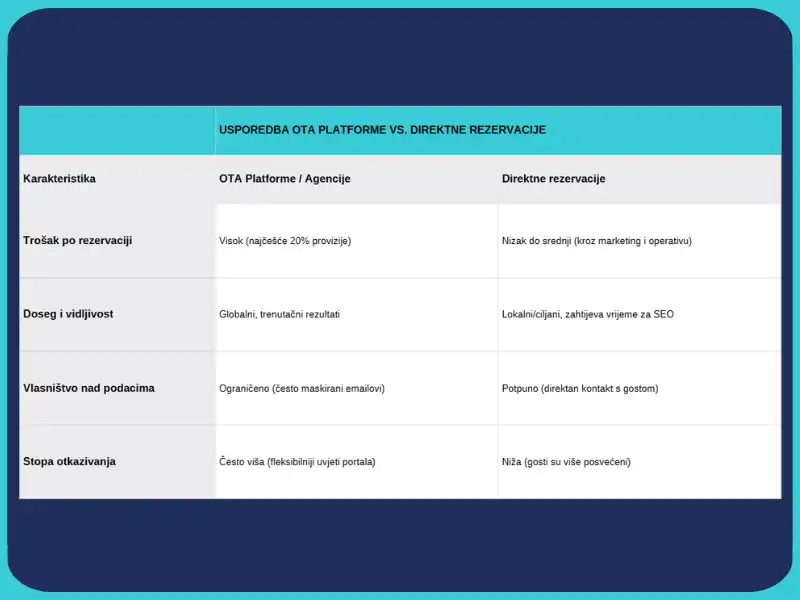
The most common argument against OTA platforms is the high commission structure, which in the charter industry often reaches around 20% and is rarely negotiable.
At first glance, direct bookings appear almost free.
In reality, they are not.
Direct bookings also have a customer acquisition cost (CPA). This includes website maintenance, SEO optimisation, paid advertising and the time your team spends communicating with potential guests.
The difference is that direct marketing costs do not grow linearly with revenue.
An agency commission will always take 20%, regardless of whether you sell one week or ten. Your own marketing infrastructure, however, becomes more efficient over time as bookings increase.
Long term, direct bookings generate significantly higher profit margins, but they require initial investment and continuous work.
Conversion strategies: Turning OTA guests into direct clients
The greatest value of an OTA guest is not in the first booking. It lies in the opportunity to turn that guest into a loyal direct customer for future charters.
Since retaining an existing guest costs significantly less than acquiring a new one, this becomes one of the most important profitability strategies for charter operators.
1. Use the check-in and check-out moments wisely
Your base team is your first sales department.
When OTA guests arrive for check-in, deliver an exceptional experience. At check-out, when emotions and impressions are strongest, provide a personalised voucher for a direct booking discount for the following season.
This is the ideal moment to offer better value without publicly disrupting pricing structures. Beyond offering a voucher for the next booking, check-out is also the ideal moment for upselling additional services.
2. Collect real guest contact information
OTA platforms often hide guest email addresses in order to maintain control over communication.
Your goal should be to collect real contact data during the stay itself. This can happen through digital crew-list systems, marina Wi-Fi logins or post-charter satisfaction surveys.
3. Automated post-stay email campaigns
Once you have the guest’s actual email address, automated communication becomes a powerful tool.
A simple sequence may include:
A thank-you email and satisfaction survey 48 hours after check-out
A reminder about direct booking advantages two weeks later
Exclusive early-bird offers during autumn or winter before opening availability to agencies
4. Introduce a loyalty programme
Guests return where they feel appreciated.
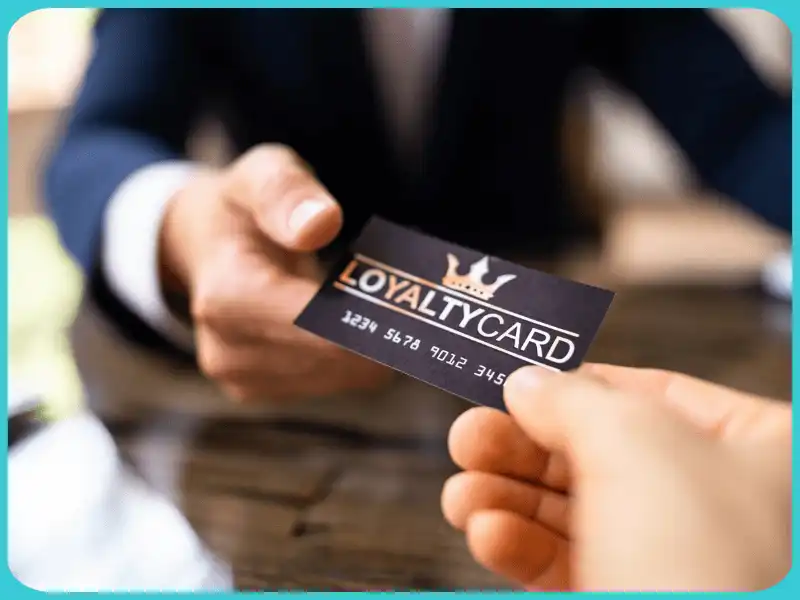
A loyalty programme does not need to be complicated. A tier-based system can be enough. For example, after the second direct booking, the guest receives a complimentary SUP board, while after the fifth booking they receive VIP status with early check-in and a premium welcome package.
The future belongs to balanced strategies
In 2026, charter companies should stop seeing OTA platforms as enemies and start treating them as paid acquisition channels for reaching new guests.
The real battle begins after the guest steps onboard for the first time.
It is time for the yacht charter industry to stop applying the rules of the old agency model to modern technology platforms.
If you provide an excellent guest experience and clearly communicate the advantages of direct booking, whether through exclusive benefits, loyalty rewards or personalised communication, that same guest is far more likely to bypass the platform and return directly to you next season.
A successful balance means using agencies and OTA platforms to access new markets while simultaneously building a strong independent brand and a loyal guest base that secures long-term business stability.
Categories of trends
- News
- Sale
- Marketing
- SEO
- Web design
- Social media
- Technology
- Regulations
- Management
- Education
- Finances
- User experience
- Graphic design
Newsletter
Sign up for the newsletter and receive the latest trends and tips straight to your inbox