- 20.01.2026.
- News, Management
Andreja Fazlić for yacht charter.hr writes about why transformations do not break on the CRM, but on trust, meaning, and a leader’s clear decisions.
I have long been engaged with the philosophical and psychological topic of integrating opposites. And the more I work on digital transformation projects (CRM, processes, changing ways of working), the more certain I am of one thing: true change in an organisation does not start with a tool, but in a leader.
Over time, I realised that almost every “resistance to change” can be translated into one inner tension: the tension between the need for things to be clear and efficient, and the need for things to be safe and meaningful. I describe this tension through two archetypal principles: the masculine and the feminine. In doing so, I am not talking about women and men, but about qualities we all carry within ourselves.
- The masculine principle likes structure, logic, analysis, and assertiveness. In business terms: execution, focus, results, discipline, and measurability.
- The feminine principle carries intuition, empathy, collaboration, and cyclicality. In business terms: meaning, context, psychological safety, relationships, and sustainability.
The problem arises when we absolutise one principle and suppress the other. In practice, it looks like this:
- When execution dominates without context, decisions are made quickly, but people do not understand “why.” Resistance grows quietly. Passive sabotage, burnout, and employee turnover appear. Transformation progresses technically, but organisationally it rarely comes to life.
- When empathy dominates without structure, there is a lot of conversation and good intention, but few clear actions, accountability, or rhythm. Meetings happen, decisions are postponed, focus is lost, and change becomes diluted.
Balance is not a “soft” topic. Balance is a prerequisite for operational performance.
Different traditions have spoken about this balance for centuries. In Eastern philosophy, it is described through yin and yang, not as opposing forces in a mutual struggle, but as complementary aspects of one whole.
In Western psychology, Jung addressed this topic through the process of individuation. This is the process of achieving psychological wholeness, which requires conscious confrontation and integration of these opposing inner principles. Without that integration, a person easily slips into a caricature of their own strength: either too rational and detached from emotions, or too passive and without clear action in the world.
On a social level, sociologist and cultural historian Riane Eisler introduces another useful framework. Through her work, she presented the model of domination versus the model of partnership to explain the historical shift in social organisation. In the model of domination, relationships are based on strict hierarchy and top down control. In the model of partnership, on equality, mutual respect, and collaboration.
The point is not for one principle to “win,” but for the system to return to balance. In companies, this shift is seen as a move from control to trust. And this is not a moral decision, but an operational one.
If you are wondering what all this has to do with business (digital) transformation, this is where the story becomes concrete.

Why transformations break (and why it is not a tool problem)
The business world has been trained for decades to reward execution: speed, control, metrics, and scaling. And that is part of the reason why transformations break. Because without context, safety, and trust, people become the “bottleneck” of every system.
You can buy the best CRM in the world, but you cannot buy people’s willingness to use it in a way that changes the business outcome.
When the “masculine” principle dominates in its caricatured version, everything is focused on delivery, timeline, dashboard, and “let’s just go live.” People receive an order, but they do not receive meaning. They do not know what is truly changing, what is not changing, and why that change matters. And without that, it is no longer their system.
On the other hand, when the “feminine” principle dominates without clear structure, everyone “talks about change,” everyone “agrees,” but there are no clear decisions, priorities, or implementation rhythm. Transformation becomes an endless process in which everyone tries, while the result keeps leaking somewhere.
This is why a human-centric approach, that is, a focus on the human, is in practice far less “soft” and far more strategic than is often assumed. It is not decoration next to a project. It is the way for change to come to life among people, without the breakdown of culture.
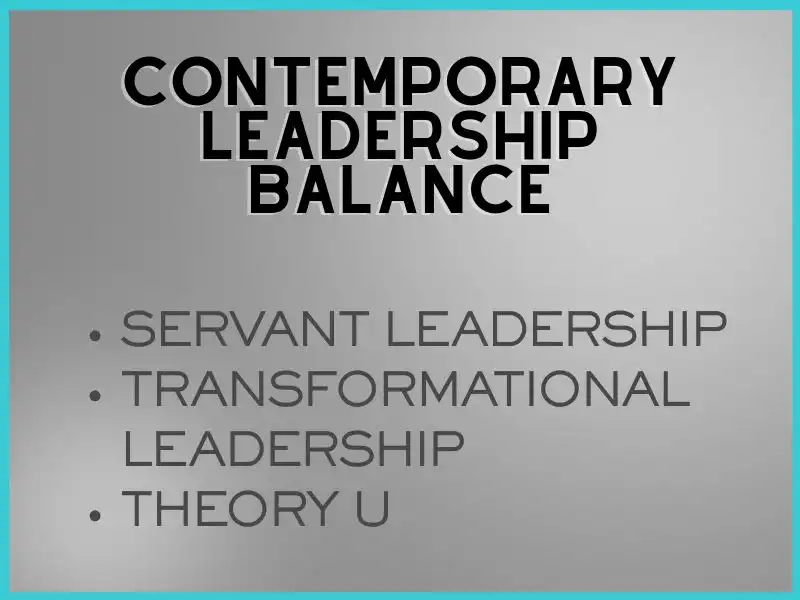
What balance looks like in contemporary leadership
We increasingly see the hierarchical model of domination giving way to approaches that integrate partnership, without losing focus on results.
- Servant leadership places the growth and well-being of employees at the centre. Leaders practise listening, empathy, community building, and psychological safety, creating trust instead of control.
- Transformational leadership seeks high goals and results but relies on emotional intelligence and individualised attention as drivers of growth.
- Theory U (Otto Scharmer) emphasises deep listening, suspending judgement, and creating space in which collective wisdom can emerge, and then the courage for clear action. Knowing which direction to take and having the strength to act in that direction is balance in practice.
The essence of the whole story lies in balance. Integrating the “feminine” principle does not remove the focus from results, but changes the way we reach them. It changes the HOW: from control to connection, from short-term output to long-term value creation.
Three questions that will show you where the imbalance is
If you are in the middle of a change, or preparing for one, or simply curious, these three questions are a good starting point for assessing the situation:
- Do we make decisions quickly, but people passively sabotage them?
- Do we have many conversations, but struggle to achieve clear progress?
- When we introduce a new process or tool, do we invest equally in context and emotions as we do in the implementation plan and KPI-s?
If you recognise yourself in the first question, you likely have execution without integration, meaning the masculine principle dominates. If you recognise yourself in the second, you likely have empathy without structure, meaning the feminine principle dominates. If you recognise yourself in the third, you have a real chance for your transformation to be more than a “facelift,” because you are clearly already balancing the mentioned opposites well.
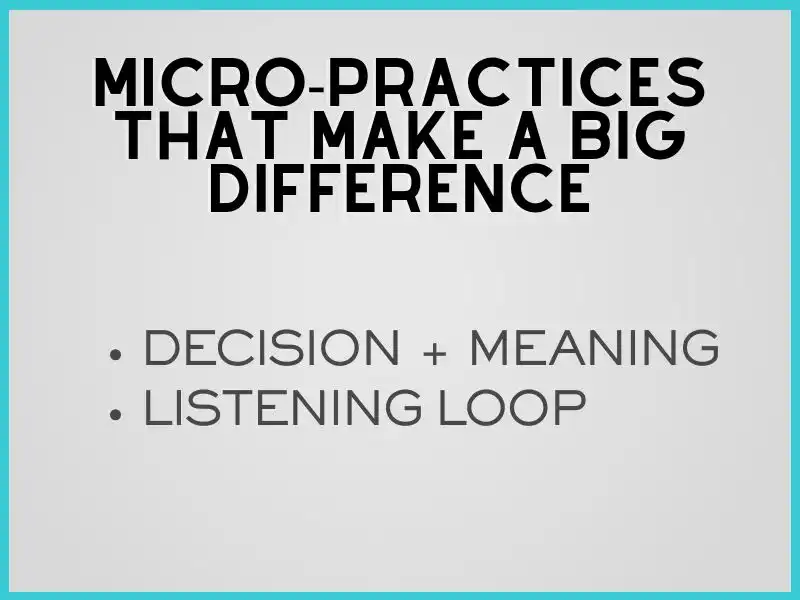
Two micro-practices that reduce friction during change
There are small practices that regularly make a big difference in digital transformation projects and/or CRM implementation:
- Decision + meaning (up to 3 sentences): with every major decision, write “why,” “what it will mean for people,” “what will not change.” This is the bridge between strategy and psychology.
- Listening loop (max 20 minutes): two weeks after the change, check with people: “what is unclear, where do we have friction, what do you need from me.” This does not waste time, but removes resistance before it becomes an expensive mistake.

HubSpot as an example: from performance to trust
This topic has fascinated me for years, woven through everything I do, but I must admit that what completely “sealed” it for me was attending HubSpot’s INBOUND in September last year. That trip to San Francisco was not just a business trip, far from it. It was a moment of personal confirmation of what I have long felt and practised in my work, but did not have the courage to articulate this clearly and publicly.
It strengthened my insistence on the human-centric approach, that human touch which is often missing in digital transformation projects and CRM implementations. Behind every process and system stands a person who needs context, understanding, and direction, not just an order.
“Every transformation starts with the decision to lead,” said Karen Ng, EVP of Product at HubSpot. I agree with her, and I am free to add that every true transformation starts first with leading oneself. Because how can we lead others if we have not learned to consciously and gently manage ourselves?
“We do not chase clicks, we build trust”; the second sentence that I deeply felt and that resonates with me, and it was spoken from the stage in front of 12,000 people by Yamini Rangan, CEO of HubSpot. And for me it does not represent only a business strategy, but a confirmation that true strength lies in the patient building of relationships, not in the obsession with short term results.
It takes a long time for the impressions of that trip to settle, just like the idea of telling the story of HubSpot’s evolution through the lens of the masculine and feminine principles in leadership. Because the transformation that took place when Yamini Rangan took over the company in 2021 is more than clear.
Before (2006–2021), under the leadership of Brian Halligan and Dharmesh Shah, HubSpot was strongly focused on scaling, performance, and growth, that is, the classic values of execution that were necessary for building a technological platform.
Today, with the integration of the partnership model, we see the evolution of culture: empathy becomes part of the way of working, transparency replaces control, and trust becomes the foundation of the system. I am not claiming that empathy is the cause of revenue, but that a culture of trust reduces friction, accelerates the adoption of changes, and eases major strategic shifts. The results, including the AI pivot and revenue exceeding 2.5 billion dollars, show that empathy and action together can create sustainable success.
Integrating the “feminine” principle is not only an ethical imperative, but also a business necessity. More and more global research continuously shows the connection between diversity in leadership and financial success, precisely because such systems encourage innovation, better risk management, and achieve greater employee loyalty. And here I am not talking about filling quotas, but about the quality of the decision making system and culture.
True transformation is not possible without the reestablishment of balance.
Any change that ignores the integration of opposites remains technical, short term, and superficial. The return to wholeness, in which structure and humanity, clarity and empathy, action and meaning operate in balance, is not an ideological choice, but a prerequisite for sustainable business and healthy organisations in which people know why they do what they do.
If you want to learn how to lead projects and changes in your organisation in a way that connects execution and context, structure and humanity, so that change does not stop at resistance but comes to life in practice, contact me for a 1:1 conversation.

Source and inspiration:
https://thesystemsthinker.com/leading-the-shift-from-a-dominator-to-a-partnership-culture/
https://hr.wikipedia.org/wiki/Individuacija
https://www.oxfordleadership.com/feminine-principle-and-theory-u-character-based-leadership/

Andreja Fazlić
Andreja Fazlić is the founder of the consulting agency Astarta: Bit, which operates at the intersection of marketing, sales and business development through the Inbound methodology. Regardless of whether she introduces novice entrepreneurs to the world of digital business, marketing and sales, or collaborates with already developed organizations in the transformation of their business, she helps her clients systematize, organize and implement tailor-made solutions that enable them to more easily adapt to market changes and consumer habits, while at the same time achieving higher revenues and a more stable position on the market.
Categories of trends
- News
- Sale
- Marketing
- SEO
- Web design
- Social media
- Technology
- Regulations
- Management
- Education
- Finances
- User experience
- Graphic design
Newsletter
Sign up for the newsletter and receive the latest trends and tips straight to your inbox