The previous policy towards nautical tourism was, to put it mildly, restrictive, with a limited number of subsidies that were also low. However, HAMAG BICRO, after a considerable break, is introducing new financial programs. It seems there has been a significant change, or as Ivica Žuro says, "the cold heart of the stepmother has melted". Read on to find out what these programs actually offer and how you can take advantage of these competitive financial incentives.
After we established for the last time that in terms of incentives, the policy treats nautical tourism in a stepmotherly way because a small number of low grants are provided for a single serious competition; as the temperature warms, the cold heart of the stepmother also melts.
Namely, after a rather long break, the domestic agency for encouraging small entrepreneurship, HAMAG BICRO, announced new credit programs for entrepreneurs and farmers.
There are various possibilities, depending on whether they are looking for working capital, whether they are also going to make some investments, and what the amount and type of investment are.
What is important is that these are very competitive interest rates and loan coverage percentages.
Our focus is on financing entrepreneurship, so we'll discuss the mentioned programs on this occasion.
ERDF loans - financial "infusion" for small businesses
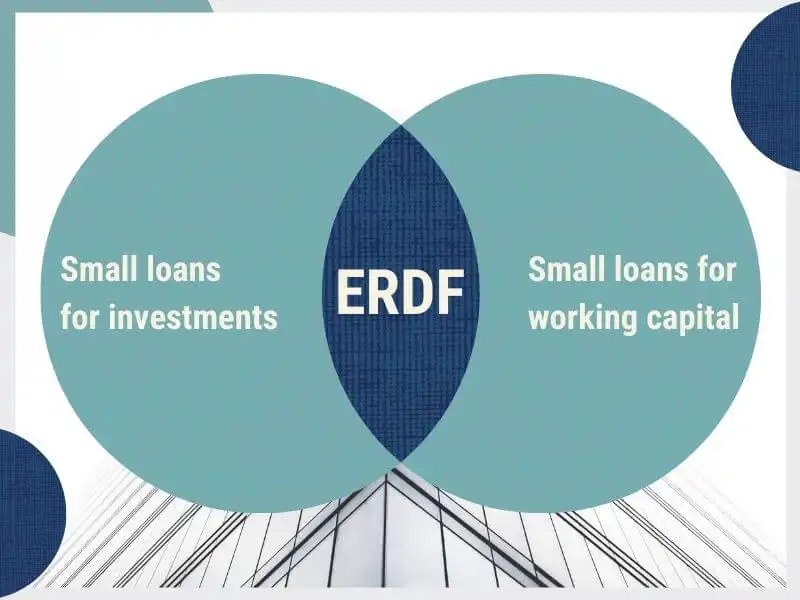
Two types of loans will be financed from the European Regional Development Fund:
- ERDF Small loans for investments and
- ERDF Small loans for working capital.
Small loans for investments will be credited to entities of small businesses through the financing of fixed assets (tangible and intangible assets) and working capital up to a maximum of 30% of the loan amount.
The maximum amount is 100,000 euros, and the repayment period is 10 years with a grace period. The interest rate is the base rate valid for the Republic of Croatia on the date of receipt of the request, minus 1 percentage point.
This specifically means the official 4.11% minus 1 percentage point = 3.11% interest rate throughout the loan repayment period.
Security for entrepreneurs - strengthening of primary and working capital
Loans for working capital are intended exclusively for financing costs such as production preparation, raw materials and materials, employee costs, lease of office space, overhead costs, general costs, etc.
The maximum amount of the Small loan for working capital is EUR 30,000 and, the repayment term is up to 3 years. The interest rate is the introductory rate valid for the Republic of Croatia on the date of receipt of the request, minus 0.5 percentage points. That is 3.61%.
Eligible loan applicants in both cases must, among other things, meet the following criteria:
- have at least one full-time employee, including the entire duration of the loan agreement
- they must not have a Giro account continuously blocked for more than 30 days in the last 6 months or be currently blocked
- properly settle existing debts
- have no outstanding obligations towards the state or have agreed with the state to reprogram the obligations in accordance with current regulations.
For all those making more significant investments—and who do not have, say, an acceptable level of collateral in the form of free real estate or something else—the news arrives that this agency's guarantee program for business loans to banks has been additionally extended.
Not only that, but the specified investment guarantee can go with the amount of 2 million euros, covering 80% of the debt!
The goal of these financial instruments is to increase the availability of loans and guarantees to small business entities while reducing the interest rate and reducing the level of necessary insurance funds.
The guarantee program takes place through 2 measures - A for the already mentioned investments and B for working capital.
Guarantees for working capital, for which Measure B is provided for, have not been forgotten either.
As part of it, guarantees for working capital are offered in the maximum amount of up to 1,000,000 euros with a guaranteed percentage of 50%.

How ERDF loans work in practice
The whole story is very thin without a practical example, and you won't catch us on that stunt ;) so we will describe the case of how Measure A is applied.
Let's say that you have an investment in a business facility or in devices and assemblies totalling 800,000.00 euros. Your business is OK—not to brag, but it really is—and cash flow is positive, as is the business model.
You have not been blocked, except maybe for a few days and with an explainable reason (there is no shortage of hotheads in any industry), and you have at least 25% of your investment to invest.
You have done an investment study and proved that you have creditworthiness.
So 200,000.00 euros of yours is there, 600,000.00 that you hope to get in the bank is missing, and now we come to the but...
In other words, with all that, you either don't have real estate that will serve as loan insurance, or you do, but it's not even close to covering 50% of the future loan.
This is exactly what Measure A is for.
Given that it now covers 80% of the debt - specifically, EUR 480,000.00 is guaranteed by HAMAG.
The other 120,000.00 euros will be covered either by the real estate as it is or by some other insurance instrument.
Therefore, if you are interested in investing in fixed assets - if you are not, you will be when the business develops enough - definitely give yourself this opportunity to consider.
If not, you have listed working capital loans at a reasonable price.
Own capital is the most expensive because it was collected over the years and had no interest income.
Fortunately, with us, you have a reliable partner for all aspects of your business.

Ivica Žuro
Ivica Žuro is a consultant in finance, banking and corporate management. He is the owner of MM Beneficium business consultancy. After a long career in banking where, among other things, he was a long-term director for Central Dalmatia at Splitska banka, he decided to use his experience in financing and management consulting. His specialism is the financing of entrepreneurship and legal persons, as well as the refinancing of existing obligations with more favourable lending, as well as organizational improvements and savings on business costs.
Categories of trends
- News
- Sale
- Marketing
- SEO
- Web design
- Social media
- Technology
- Regulations
- Management
- Education
- Finances
- User experience
- Graphic design
Newsletter
Sign up for the newsletter and receive the latest trends and tips straight to your inbox