- 18.03.2026.
- Management
When a leader sets change in motion and then disappears from the process, the consequences do not stay in the meeting room, but surface in the middle of the season. In this article, Andreja Fazlić examines how much that pattern costs the team, day to day operations, and the overall guest experience.
Why leaders run from transformation, and how much it costs their team at the peak of the season
There is a pattern I have seen in almost every digital transformation project I have worked on.
The director comes to the first meeting. Enthusiastic, engaged, full of vision. He talks about how he has been waiting for the right moment for this change for years. How he is tired of putting out fires. How he finally wants to build something that works without him. He signs, nods, says "you know this better than I do" - and disappears.
He gets in touch during the week when the budget needs to be approved. He shows up at the kickoff because it would have been awkward not to come. He replies to a couple of emails - a week late - when the questions become too specific to ignore.
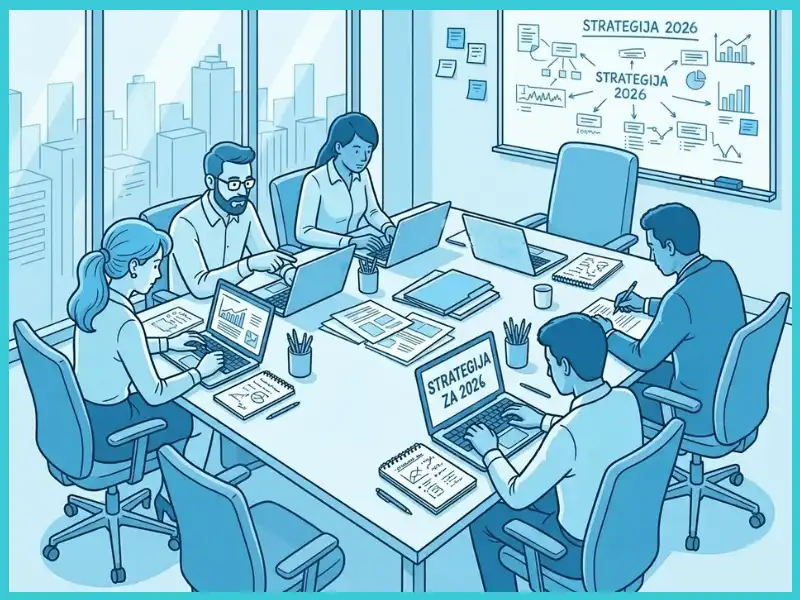
And the team works. It learns a new tool. It designs processes. It spends weeks on something it has never done before, without clear instructions, without priorities, without someone saying "yes, go in that direction." It asks. It waits. It assumes. It makes a decision because it has to keep moving. And it does that well - within the limits of what it knows and what has been delegated to it.
And then the director appears. At the results presentation, at the end of the first phase, or - which is most often the case - only when something starts to go wrong. He looks at what has been done. He frowns. And says: "this is not what I had in mind."
The team falls silent. One of the people present looks at the table. Someone else looks at their laptop as if a very important email has just arrived.
And that is where everything stops. Not loudly, not dramatically. But quietly, like when you turn off the air conditioner and only then realize how much noise it had been making the whole time.
Delegation as the most elegant form of avoidance
For a long time, I was inclined to react to this pattern with frustration. Over time, I understood that what lies behind it is neither disinterest nor bad intentions, but something much deeper and much more human.
But before I continue, one clarification, because delegation in itself is not the problem. On the contrary, delegation is one of the most important leadership skills. It frees up the leader's capacity for strategic decisions. It develops the team's competencies. It builds trust and autonomy. Without delegation, every leader becomes a bottleneck in their own business.
The problem is not delegation. The problem is when delegation becomes an excuse for absence.
And the difference between those two problems is not always easy to see, neither to colleagues nor to the leader themselves. Because from the outside, they look the same. The project is assigned to the team, the team is working, the leader does not interfere. The only difference is that in one case the leader does not interfere because they trust the team and monitor things from a distance, and in the other because they feel uncomfortable being present. And that discomfort has very specific reasons.
Change is a threat. And not only to employees learning a new tool, but also, perhaps especially, to the leader who initiated that project. Because a leader who actively takes part in redesigning processes must be ready for several distinctly uncomfortable things. They must sit at the table with people who know more than they do about details they themselves should be familiar with. They must accept that the old way of working, which they supervised for years, defended, and perhaps even designed themselves, is no longer enough. They must make decisions in situations where they do not have all the information and where there is no clearly correct answer. They must be visible in a moment of uncertainty, and for someone used to operating from a position of authority and knowledge, that is an extremely uncomfortable place to be.
None of us likes to appear uncertain in front of our team. None of us likes being in a room and not knowing the answer. None of us likes admitting, either to ourselves or to others, that the way we have worked for years may not have been optimal.
Escaping into delegation resolves all of that elegantly. The project exists, activities are taking place, it can be said that work on the transformation is underway, and the leader is not exposed to it. They are not at risk. They are not responsible for details that could turn out to be wrong. And they can preserve their authority without having to test it again.
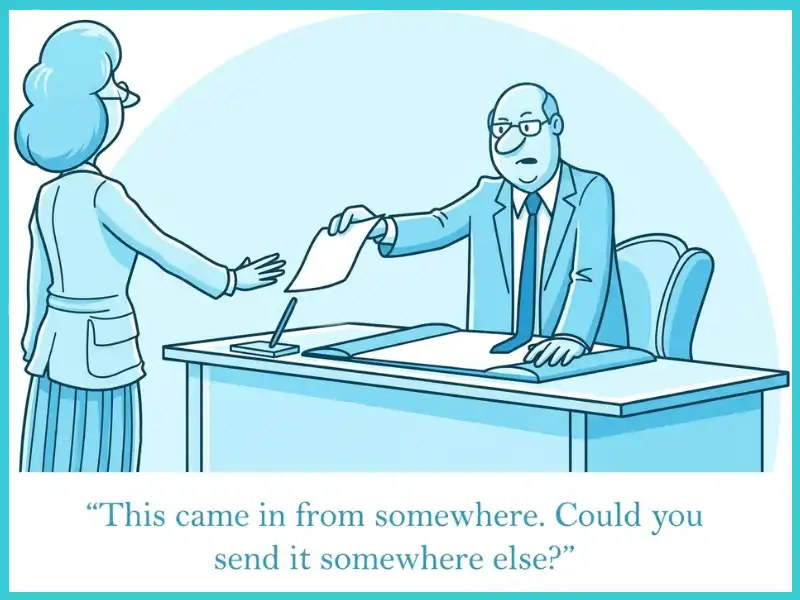
What the team learns while you are absent
A team that works without clear and present leadership does not stagnate - it improvises.
And from the outside, that improvisation looks like progress. Meetings are held, tasks are completed, the system is filled with data. But beneath the surface, something else is happening. Every decision the team makes without your knowledge carries an unspoken question: will this pass? Every step forward carries the risk of being undone when "he/she shows up and takes a look."
Over time, the team develops a survival strategy. It does not do what is most efficient - it does what it thinks will be approved. It stops suggesting. It stops initiating. It waits to be asked. Because initiative that was not supported once is not easily repeated a second time.
The problem reaches its peak at the moment of return. The leader comes back and judges a result without having followed how it was created. And at that point, what is being evaluated is not the quality of the team's work. What is being evaluated is whether the result aligns with a vision that was never clearly articulated enough, not to the team, and perhaps not even to the leader themselves.
That is the moment that destroys trust. Not dramatically, not with raised voices, but quietly. The team learns that initiative is not safe. That it is better to wait than to move. That every bit of progress is temporary until someone "from above" sees it and confirms it.
And the culture that is formed then, a culture of waiting and self-protection, does not remain like a picture on the wall. It goes outward. It spills into the season. It spills into every contact with the guest at the moment when there is no one to ask, and a decision has to be made immediately.
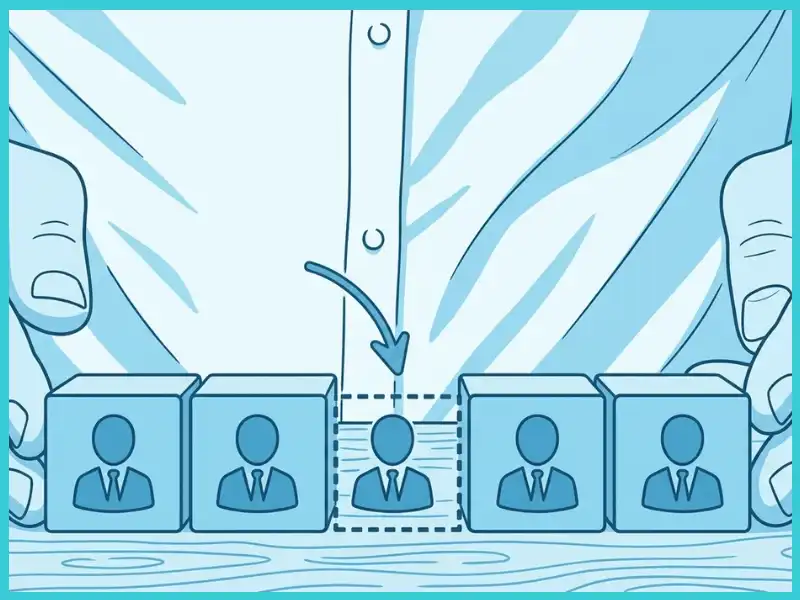
July does not lie
In July, there is no time for fine-tuning, aligning visions, and repeat meetings. In July, all that becomes visible is what has actually been built, and what has not.
Teams whose leaders were not present in the system-building process do one of two things at the peak of the season: either they wait for instructions at every step, or they make decisions without being sure whether they have the authority to do so. One crew member does not know whether they are allowed to offer the guest an alternative date without asking first. Another person replies to an inquiry a day late because they are not sure what the correct answer is. A third improvises, and that improvisation ends as a bad review that does not describe the boat, but the experience.
And the leader who started all of this, who signed off on the project, who was enthusiastic at the first meeting, sits down in September and does not understand what went wrong. The tool is there. The system is there. Why are the results not?
Because a tool does not know how to lead. A system does not know how to make decisions. And a team that did not have a real captain at the helm cannot sail itself out of a storm.
Leaders who have exceptional seasons are not the ones with better applications. They are the ones who were present enough for their team to know what to do without them, and mature enough to truly allow that.
That maturity is not a character trait you are born with. It is the result of work. Work on understanding your own psychology in the context of change, your own fears of losing control, your own discomfort with uncertainty, your own need for it to be exactly "the way I had imagined it."
A leader's personal development is not a soft skills topic and it is not a luxury for calm business periods. It is an operational prerequisite for every season.
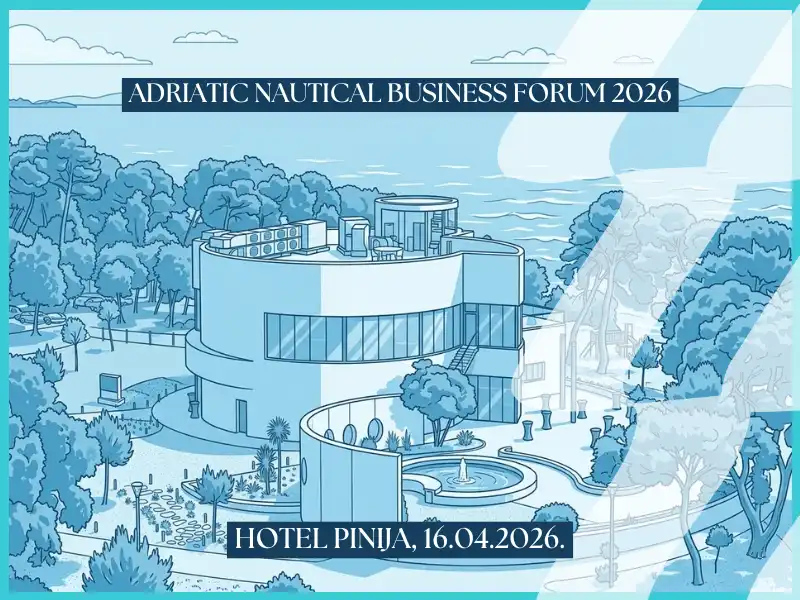
Where this story continues
Next month, I will be giving a lecture as part of Adriatic Nautical Business Forum 2026, and I deliberately built it around this premise: The peak of the season and a premium experience never test technology, but processes and leadership.
Because after years of working on digital transformation projects in yacht charter, hospitality, and SaaS, I am convinced that this is the greatest underused growth lever: a leader who is developed enough to build a system that functions without them, and a team that has enough trust to set it in motion.
In the lecture, I will go into the details of what this looks like in practice, through concrete examples, experience, and an understanding of what stands between good intentions and real results.
Because technology can help. Processes can be perfect on paper. But change is always, truly always, driven by people.
If you are coming to the forum, let's connect on LinkedIn and start conversations about changes that bring real results.

Andreja Fazlić
Andreja Fazlić is the founder of the consulting agency Astarta: Bit, which operates at the intersection of marketing, sales and business development through the Inbound methodology. Regardless of whether she introduces novice entrepreneurs to the world of digital business, marketing and sales, or collaborates with already developed organizations in the transformation of their business, she helps her clients systematize, organize and implement tailor-made solutions that enable them to more easily adapt to market changes and consumer habits, while at the same time achieving higher revenues and a more stable position on the market.
Categories of trends
- News
- Sale
- Marketing
- SEO
- Web design
- Social media
- Technology
- Regulations
- Management
- Education
- Finances
- User experience
- Graphic design
Newsletter
Sign up for the newsletter and receive the latest trends and tips straight to your inbox