You have a website. Or you invested in updating an old one. Do you know how your website can also be a sales generator? Do you know how you can do that? Do you even know that you can sell your services on your website?
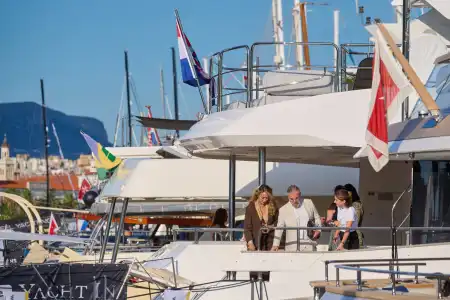
Yacht charter companies are increasingly investing in new websites. Everything looks good, the photos are high quality, the design is modern, and the boats are neatly presented. Visitors come to the website and browse the content, but there is no inquiries. Everything still depends on intermediaries.
The problem isn’t the look of the website. The problem is that the site isn’t doing what it should: turning visitors into guests. It’s not enough to have a nice website and nice photos of boats. You need something that works.
A website should be a source of sales, not an expense.
The website does not lead to bookings
Many yacht charter websites resemble old brochures.
The content is there, but the visitor doesn’t know what to do next. Everything looks nice, but nothing prompts action.
There is no clear path to booking, there are no elements that make the decision easier, and there is no trust in the process. Everything is focused on presenting the offer, not selling it.
This is especially problematic because most visitors spend only a few minutes on the website, specifically from 1 to 3 minutes. If within that time they don’t find a clear reason to stay and book, they will leave either for another yacht charter, an agent, or an OTA channel.
The most common obstacles:
- there is no structure that leads to a decision
- information is scattered, without a logical sequence
- all boats are presented in the same way, without highlighting advantages
- calls to book are unnoticeable or not there at all
- the contact form is presented as the only option, instead of as a supporting option
- there is no additional content that would hold the visitor’s attention (e.g., recommended routes, guest experiences, local attractions)
A website that wants to achieve direct bookings must have a clear sequence:
- grab attention with a headline or an image
- provide enough information for a decision
- offer the next logical step (booking, an inquiry, or a price calculation)
Every part of the website must have a purpose. Every piece of information must help the guest make a decision. When that’s missing, the website isn’t doing what it exists for, it isn’t turning the visitor into a guest.
The contact form is not a booking system
When a guest doesn’t know when they will receive a reply, it becomes difficult for them to decide.
People who are considering renting a boat want to compare offers and immediately know what to expect.
If the only thing you offer is filling out a contact form, the sense of security in the process is lost. The form can be useful as an additional way of communication, but it cannot be the foundation of sales.
A visitor to the website is looking for:
- information about boat availability for a specific period
- the total rental price with included and additional costs
- the possibility of a fast reservation without waiting for a reply and emails
If they have to wait for a response or send additional questions, there is a high probability they will give up and book where everything is clear and immediately available.
Modern online booking systems also offer a simpler solution:
- clear availability calendars for each boat
- the option to filter by length, equipment, marina
- an approximate price calculation depending on the date, duration, and type of boat
- automatic sending of confirmation or information about the next step
Today, guests want to choose and book quickly, as they do with apartments. If they can’t, they will book elsewhere.
Photos are great, but without information they mean nothing
Almost all yacht charter websites today use photos of vessels either from their own marina or from the manufacturer’s stock.
However, people don’t choose a boat based only on a picture, they want to know what they are getting, what the interior looks like, what is included in the rental, and whether that boat suits their real needs.
If there is no basic information alongside the images, the guest doesn’t know what they are actually looking at. Without context, an image is just decoration.
The most common mistakes:
- images without labels and information - the visitor doesn’t know exactly what they are looking at
- no boat layout or cabin plan
- the interior is missing - only exterior shots are shown
- data about length, draft, equipment, and capacity are not connected to the images
- photos are not aligned with the offer (a stock model that is not in the fleet is shown)
Instead, you should offer content that informs and leads to a decision:
- add a short description next to each image, not just the boat name
- show the layout of cabins and shared spaces, with labels indicating where the WC, kitchen, and deck are
- include interior photos from multiple angles, with natural lighting
- clearly mark amenities that are included (e.g. WiFi, solar panels, bimini)
- state from which base the boat departs, whether the marina provides secured parking, and whether it is suitable for families with children
An image attracts attention, but clear information encourages a reservation. Without information, even the best photograph doesn’t help.
Prices are hidden, and they shouldn’t be
If a visitor cannot quickly find at least an approximate price, they will most likely look for another website. People want to know the price range of the rental and what is included in that price. When the price isn’t clear, it’s hard to build trust.
Examples of how this can look:
- "Weekly rental from €1,600 in the preseason"
- "Seasonal prices: May from €2,000, August from €3,900"
- "10% discount for early bookings until January 31"
- "Benefits for repeat guests and multiple boat rentals"
It’s important to clearly state what the base rental price includes:
- bed linen, towels, and final cleaning
- tender and outboard engine
- WiFi, generator fuel, tourist tax
- mandatory additional fees (e.g. transit log, security deposit)
A guest who can immediately see an approximate price finds it easier to decide. They are not looking for the lowest price, but for a clear offer.
SEO: if Google doesn’t show you, no one will find you
When people search for a boat, they type specific terms such as "sailing yacht rental Split" or "catamaran Croatia". If your website doesn’t appear among the top results, you lose the chance to contact the guest already in the first phase.
Websites that neglect search engine visibility often have the following problems:
- titles like "Home" or "Homepage" without information explaining what it’s about
- boat descriptions don’t contain the terms people actually search for (e.g. length, equipment, route, price)
- the website is rarely updated, everything looks the same since it was launched
- there is no content that answers future guests’ questions
- names of marinas, ports, or specific destinations are not used
What can be improved without major interventions:
- titles and descriptions should include real terms from yacht charter searches
- the blog can include topics such as "Best departures from Split for a week of sailing"
- for each boat, the model name, departure base, number of cabins, and weekly price range should be listed
- the website must be written in natural language, the way people who are looking to rent a boat actually think
- files (images, PDFs) should have names that help Google recognize you
If no one can see you, they can’t book with you either. Visibility doesn’t happen on its own, it has to be planned.

The website does not inspire trust
A guest who encounters your yacht charter for the first time has no prior experience on which to base a decision.
Based on just a few seconds spent on the website, they form an impression of whether you are a serious company and safe to work with. If they find a poor translation, a non existent address, or an email ending in gmail.com, the website loses credibility.
How to increase credibility:
- clearly display the full company name, physical address, and phone number
- use a professional email address connected to your own domain
- add photos of real team members, boats from your base, and content that is actually being offered
- show verified reviews (Google, Facebook, Trustpilot)
- state connections with the tourist board, membership in the chamber of commerce, nautical associations, or similar organizations
- explain who you are, how long you have been operating, and what sets you apart from others
If there is no clear proof that a real company stands behind the website, the guest remains uncertain. And when there is doubt, a reservation usually does not happen.
The mobile version must be a priority
More than half of people, specifically around 64% of people who search online, use mobile devices. If the website is not fast, clear, and easy to use, they give up without hesitation.
The mobile version of your website must be adapted to real user behavior, not just a reduced copy of the desktop version. Everything important must be immediately visible and accessible without searching.
The mobile version must:
- have a clear structure with simple, dropdown menus
- have a clear layout adapted to the screen size
- immediately show a booking button or cost calculation
- enable calling without copying the number - the number must be clickable
- load content and images quickly, without delays or empty displays
- clearly show the departure location on a map (integration with Google Maps)
If a guest has to zoom in on text, search for basic information, or click too much to find essential details, your website is not actually doing its job. Mobile clarity is not a technical issue, but a condition for making a reservation.
People are looking for clarity, speed, and security
The website of your yacht charter company must be clear, content accurate, and technically reliable. A person considering renting a boat expects all important information to be easily accessible, without too many clicks and without the need for additional explanations. The simpler the website is to use, the higher the likelihood that the visitor will stay and send an inquiry or make a reservation.
Basic expectations that every website must meet:
- a clear presentation of what you offer, who it is intended for, and under what conditions
- the possibility of fast and clear booking, without waiting
- content that confirms the seriousness, accuracy, and availability of the service provider
This specifically includes:
- an availability calendar for each boat, updated and easy to read
- clearly highlighted prices with an explanation of what is included and what is not
- a precise description of the process after booking: when payment is made, how to reach the marina, where the boat is picked up
- visible contact details already on the homepage (phone number, email, WhatsApp)
- clearly written cancellation rules and basic company information
If the website leaves an impression of uncertainty or lack of clarity, most visitors will look for a solution elsewhere. When everything is available and explained in time, the possibility of direct booking increases, without intermediaries.
A website that brings bookings looks like this
A website that turns visitors into guests does not have to be expensive or technically complex. What matters is that it is clear, content focused, and adapted to the behavior of the people who visit it. Information must be easy to find, and every action must have meaning and purpose.
Such a website includes:
- fast loading on all devices, including weaker mobile networks
- a logical content layout and easy navigation without unnecessary searching
- the ability to reserve a date or send an inquiry with specific parameters (date, boat type, departure base)
- clearly displayed prices with an explanation of what is included and what additional charges are possible
- headlines and texts adapted to the phrases guests regularly search for
- a mobile version that allows easy reading, browsing, and booking
- content based on real data, people, and experiences, without empty phrases
Such a website saves time and helps the guest make a decision without uncertainty.
A beautiful website is not enough, sales are generated by the one that does its job
In the yacht charter industry, where guests increasingly inform themselves and make decisions online, the website must take on the role of a salesperson. It should not look like a brochure, but like a tool that leads to a concrete reservation. If a visitor cannot see availability, price, and the way to book, they will go where they can.
Most websites lose guests not because they are bad, but because they do not lead toward a decision. Structure, clarity, and a call to action are missing. And when all of that is put in place properly, results come, without intermediaries.

Do you want a website that really sells?
At čarter.hr we work with yacht charter companies that want more direct bookings. We help you identify where your website is losing visitors and how to fix it without a complete redesign.
Use your website. Do not let it just look good, let it bring bookings.

Categories of trends
- News
- Sale
- Marketing
- SEO
- Web design
- Social media
- Technology
- Regulations
- Management
- Education
- Finances
- User experience
- Graphic design
Newsletter
Sign up for the newsletter and receive the latest trends and tips straight to your inbox