
As the end of the year approaches, we return to the same question: where do we actually stand? Some figures catch us off guard, others have already become part of the standard repertoire, but together they reveal where our small economy is heading. In his new article, Ivica Žuro brings us a reminder of what we avoid admitting, but many will find familiar.
While the festive atmosphere lasts - and a touch of cold, good company, good food and even better social liquid catalysts stir something warm in a person - it is time for the traditional question: what awaits us in the coming year?
And the answer to the first one - still inflation and still dependence on money from abroad.
From tourists, the EU budget and remittances from citizens of our Lijepa Naša working abroad. The latter is often overlooked, and it is very important.
More than 2 billion euros come from Germany alone each year, and over 5 billion in total, or 7.50% of GDP. By that measure we are record holders in the EU, and stronger than us by this criterion on the continent are BiH, Serbia, Kosovo and North Macedonia (for obvious reasons in all cases) and Ukraine, whose diaspora has grown due to the war.
Turkey is somewhere around the same level as us.

We are slowing down, saving and hoping for a miracle (as we do every year)
Let us be specific and that is - we are slowing down slightly and something needs to be done to prevent a more serious standstill.
GDP growth slowed sharply in the third quarter of 2025 to 2.3% year on year, after a stronger first half of the year when growth amounted to 3.4%.
Personal consumption slowed sharply compared to the first half of the year due to weaker employment, a real decline in income from tourism during the peak season and an increase in savings. Industry is recording a decline in energy and consumer goods, but the strong growth of export-oriented capital and intermediate goods with increased productivity is encouraging.
The high level of inventories and the decline in capacity utilisation are a signal of caution regarding the demand of key Croatian trading partners and the tensions between the EU against itself and the USA against everyone.
The domestic GDP growth forecast for 2026 remains at 2.5%, but risks prevail:
- weaker inflow of funds from EU funds of which we have used only 56%,
- slower wage growth in the real sector,
- a colder sentiment in the eurozone regarding consumption in general,
- less fiscal impulse or still high tax burden on labour in order to cover budget beneficiaries and an over-indebted healthcare sector.
The EU and its leading countries shot themselves in the foot to show that they are good doctors, that is, they got caught up in both green agendas of unattainable goals and in bureaucratising everything from the curvature of bananas to underfloor heating. Their citizens generally live worse, and industries face export problems, and then it is clear that they do not need goods from Croatia, nor do they need the cost of holidaying here.
Essentially, the more we relied on their money - we counted on it, and now we need to turn to other markets. And we would achieve even more if we turned to ourselves and strengthening our own capacities.

Everything is growing, except what should be
Although investments are supported by the growth of investment loans and low real interest rates, private investments are hindered by the high cost of labour and energy, regulatory non competitiveness and general uncertainty.
Croatia must strengthen investment incentive instruments, including delimiting the amount of grants or introducing new instruments modelled on those we already have in tourism, as well as introducing proportional reliefs for reinvested profits.
The gross profitability of domestic companies is still 25% lower than the Central European average and 55% lower than the EU average, while the share of the wage bill is rising sharply. This reduces the room for investment and sustainable wage growth.
In other words, the donkey will live as long as it keeps learning and keeps starving, and when it learns - it will collapse.
There is a need for continued tax and administrative relief, a reduction of energy costs for the economy and stronger targeted reforms of the labour market, education and the public sector.
Inflation is stabilising at around 4% - still significantly higher than in the EU - and in 2026 all analysts who are not on the state payroll expect a decrease to 3.4%.
Service prices continue to rise sharply due to tourism and the strong wage growth driven by state interventions through the wage bill and minimum wages.
The risk of a wage growth and price growth spiral remains present as long as the growth of incomes far exceeds the growth of productivity. The weakness of EU industry will not help either, as it will significantly reduce demand for domestic goods or raw materials, and what can be expected is real growth in merchandise exports in 2026 of approximately 4%.
What can change the slightly greyish moderate cloud are the upcoming entry into the OECD, political stability and continued reforms. The first is particularly important because it means connecting with the leading countries of the world where market regulation is in place, mostly Anglo Saxon ones but also one Turkey with which we have good relations and willingness to cooperate.
If we design investment policy wisely, it could change the trend of declining jobs in manufacturing, where 5200 jobs have been lost in one year, mostly in factories under foreign ownership.
The number of employees in manufacturing, due to the closure of a series of factories mostly in small communities - where even 10 jobs are of vital importance - no longer leads over other sectors.
Those 5200 people are a town the size of Delnice, Lipik or Ilok or an entire municipality such as Klis.
We can talk as much as we want about increases in the minimum wage, but unless there are investments in new jobs and improvements in productivity - there will be no one to pay it.
Likewise, unless the tax burden on wages is reduced, the difference created by the increase will not be felt because taxes will eat it up.
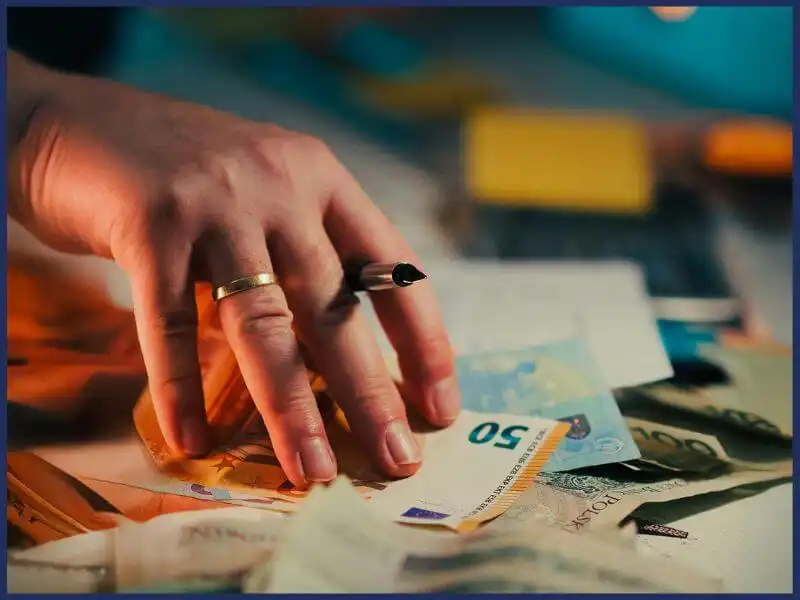
Old Croatian mathematics: cheap labour, expensive problems
Shortsightedness is not lacking on the other side either, the one that rightly calls for lower taxes.
More and more large private companies are advertising jobs for cooks and drivers with minimum wage and unnecessary work experience, which means only one thing - they are trying to reduce the entry cost by engaging cheap labour. But it is not just the minimum wage, people need to be provided with accommodation and other material rights and money needs to be spent on training… And then it is no longer 1000 gross but at least times 2 or 2000 euros and more.
And for that money they could have hired a skilled local worker or someone from the nearby area, who is certainly reliable and skilled in the job.
This is particularly evident in tourism, and here one must ask - is saving on the cost worth the risk of a poor guest experience, or God forbid, possible food poisoning or driving off a cliff?!?


Ivica Žuro
Ivica Žuro is a consultant in finance, banking and corporate management. He is the owner of MM Beneficium business consultancy. After a long career in banking where, among other things, he was a long-term director for Central Dalmatia at Splitska banka, he decided to use his experience in financing and management consulting. His specialism is the financing of entrepreneurship and legal persons, as well as the refinancing of existing obligations with more favourable lending, as well as organizational improvements and savings on business costs.
Categories of trends
- News
- Sale
- Marketing
- SEO
- Web design
- Social media
- Technology
- Regulations
- Management
- Education
- Finances
- User experience
- Graphic design
Newsletter
Sign up for the newsletter and receive the latest trends and tips straight to your inbox